
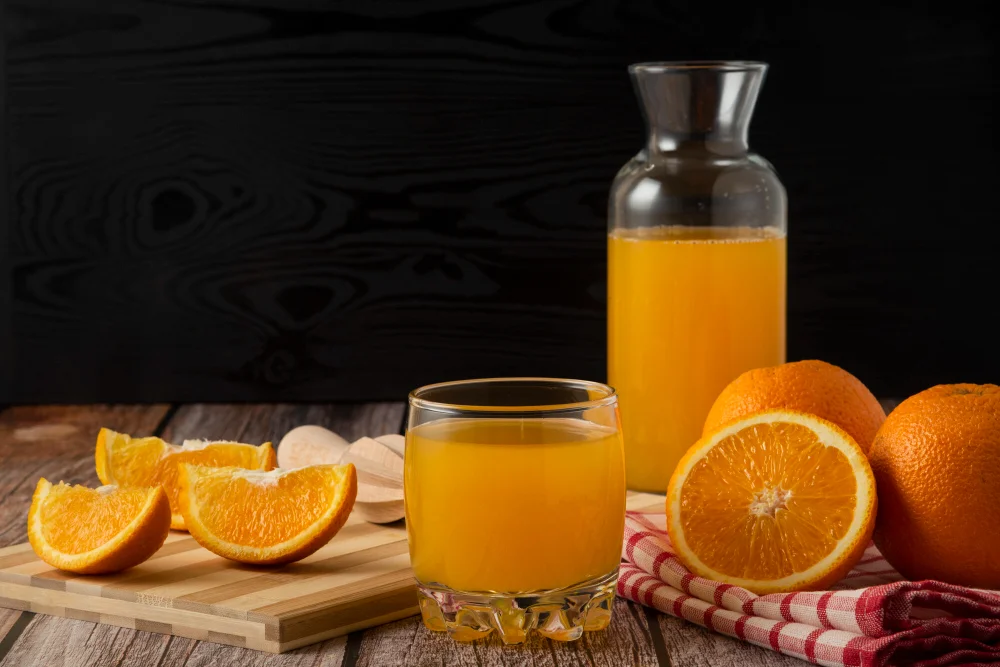
Orange juice is acidic (pH 3.3 to 4.2, per FDA data) and loaded with fast-absorbing natural sugar, a combination that can irritate the stomach, aggravate acid reflux, and spike blood sugar. That covers most people. Less commonly, the cause is fructose malabsorption, a genuine citrus allergy, a medication interaction, pregnancy, or juice that has started to turn. If the reaction happens every time, it usually points to one specific cause rather than bad luck.
You reach for it because it feels like the responsible choice: vitamin C, no caffeine, a glass of something that isn’t coffee. Then, ten or twenty minutes later, your stomach files a complaint. That gap between what orange juice is supposed to do and what it’s actually doing to you is confusing enough that most people just quietly stop drinking it and never find out why.
There isn’t one answer here. There are at least seven, and they don’t all share the same fix.
It’s Usually the Acid, Not the Vitamin C
Orange juice sits at a pH of roughly 3.3 to 4.2, based on the FDA’s own food acidity reference data. That puts it in the same range as many carbonated sodas. On a stomach that’s already empty or irritated, that much acid can be enough on its own to bring on nausea.
The bigger issue for a lot of people is reflux. NIDDK, the National Institute of Diabetes and Digestive and Kidney Diseases, explains gastroesophageal reflux disease (GERD) as what happens when the lower esophageal sphincter, the muscle that’s supposed to keep stomach contents where they belong, relaxes or weakens at the wrong moment.
GERD affects an estimated 10 to 20 percent of adults in Western countries, and citrus juice is one of its most consistently reported triggers. Surveys of people with heartburn have found that a clear majority, estimates range from about two-thirds to three-quarters depending on which survey you look at, feel worse after drinking orange or grapefruit juice specifically.
Not everyone with reflux gets the classic burning-chest heartburn. Plenty of people just get a wave of nausea instead, especially when the reflux is mild or happens without an obvious burn.
It’s probably not the vitamin C.
A cup of orange juice has roughly 124 mg of vitamin C. The NIH’s Office of Dietary Supplements puts the tolerable upper limit for adults at 2,000 mg a day, which is the point where gastrointestinal upset from vitamin C itself typically starts. You’d need to drink several liters in one sitting to get near that. If OJ is making you sick, the acid and the sugar are doing that work, not the vitamin C, whatever a “too much vitamin C” theory online might suggest.
For context, here’s how orange juice compares to other common drinks:
| Drink | Approximate pH |
|---|---|
| Lemon juice | 2.0 to 2.6 |
| Grapefruit juice | 3.0 to 3.2 |
| Orange or apple juice | 3.3 to 4.2 |
| Watermelon juice | roughly 5.0 to 5.6 |
| Water | 7.0 (neutral) |
If a less acidic juice sits fine with you but orange juice doesn’t, acid is a good first suspect.
The Sugar Hits Your Blood Fast, Especially on an Empty Stomach
A cup of orange juice carries about 21 grams of natural sugar with almost none of the fiber that would normally slow it down. Drunk on an empty stomach, that sugar reaches your bloodstream quickly.
Your pancreas answers the spike with insulin. In some people, especially if the glass was large or breakfast is still an hour off, the insulin response overshoots and glucose drops faster than it climbed. That rebound, sometimes called reactive hypoglycemia, can bring on nausea, shakiness, and lightheadedness within an hour or two.
This is why the same juice that does nothing to you at lunch, with food already sitting in your stomach, can wreck your morning at 7 a.m. on an empty one. The juice hasn’t changed. The context around it has.
Your Gut May Not Absorb Fructose the Way It Should
Orange juice’s sugar is roughly half fructose. Most people absorb it without noticing. Some don’t.
Cleveland Clinic gastroenterologist Alberto Rubio Tapia describes dietary fructose intolerance, also called fructose malabsorption, as a cluster of symptoms: gas, bloating, diarrhea, and abdominal pain, and there’s no reliable estimate of how common it actually is. A 2016 review in Molecular and Cellular Pediatrics lays out the mechanism: fructose that isn’t absorbed in the small intestine travels on to the colon, where bacteria ferment it into gas and short-chain fatty acids. That fermentation is what produces the bloating, and in a lot of people, the nausea that comes with it.
Fructose malabsorption rarely shows up as one dramatic reaction. It’s often subtle enough that people blame “the acid” for years before anyone tests for it. If nausea shows up specifically with high-fructose foods (apples, pears, honey, juice concentrate) and not with foods that pair fructose with roughly equal glucose (a banana, for instance), that pattern is worth describing to a doctor.
It Could Be a Genuine Allergy, Not Just Sensitivity
There’s a real difference between citrus irritating your stomach and citrus triggering your immune system, and the two get confused constantly.
Citric acid itself isn’t an allergen. It’s an irritant: it can upset a sensitive stomach lining without your immune system ever getting involved. A true orange allergy works differently, driven by specific proteins in the fruit: Cit s 1 and Cit s 3 are the two identified so far, according to allergen reference data from Thermo Fisher’s ImmunoCAP allergy diagnostics division.
Healthline’s medically reviewed guide to citrus allergy describes the most common pattern as oral allergy syndrome: tingling or itching of the lips, tongue, and throat that shows up within minutes, often in people who already have a pollen allergy.
Digestive symptoms, nausea, vomiting, cramping, can happen too, and they don’t always arrive with the mouth-itching that would make the allergy obvious. A citrus allergy can also appear later in life. Plenty of people drink orange juice without issue for decades and then develop a reaction seemingly out of nowhere.
Hives, throat swelling, or trouble breathing after orange juice is not a stomach problem. That’s an allergic reaction, and it needs medical attention, not a wait-and-see approach.
A Medication Might Be the Hidden Factor
This is the one almost nobody mentions, and it has nothing to do with your stomach directly.
Orange juice inhibits a group of gut transporters called OATPs (organic anion transporting polypeptides), which normally help move certain drugs from your intestine into your bloodstream. A clinical study on fruit juice and drug absorption found that a normal-strength glass of orange juice cut the absorption of fexofenadine, the antihistamine sold as Allegra, by around 72 percent when the two were taken together. The mechanism runs opposite to the well-known grapefruit interaction: grapefruit juice tends to raise drug levels by blocking a liver enzyme, while orange juice tends to lower them by blocking gut uptake.
| Medication | What OJ does to it | Better approach |
|---|---|---|
| Fexofenadine (Allegra) | Can cut absorption by roughly a third to two-thirds | Take with plain water instead |
| Aliskiren, celiprolol, atenolol | Similar OATP-related drop in absorption | Separate the dose from juice |
| Aluminum or magnesium antacids | Acidity can blunt how well the antacid neutralizes stomach acid | Take antacids away from juice, not with it |
| Some antibiotics (e.g. ciprofloxacin) | Acidity, and in calcium-fortified brands, added calcium can reduce absorption | Space dosing a couple of hours apart |
If you’re already fighting nausea and reach for an antacid alongside a glass of OJ, you may be undoing the antacid at the exact moment you drink the thing that’s upsetting you. Nobody needs to avoid orange juice altogether over this. A clinical review of fruit juice and drug absorption simply recommends keeping a few hours between the two.
Pregnancy Changes How Your Body Reads Citrus
Nausea and vomiting of pregnancy affects a wide range, an estimated 50 to 80 percent of pregnant women, and it doesn’t discriminate based on what you used to enjoy eating.
Rising estrogen and hCG sharpen the sense of smell and taste early in pregnancy, sometimes dramatically. A food that never bothered you can suddenly smell overwhelming, and orange juice’s strong scent and acidity make it a common target. This isn’t a new allergy or a new sensitivity to citrus specifically. It’s a temporary, hormone-driven change in how your senses process it.
If OJ is one of several foods you’re now avoiding and the rest of your diet is holding up fine, there’s usually no need to force it. Vitamin C is available from plenty of other sources. If the nausea is constant, severe, or paired with an inability to keep fluids down, that’s worth flagging to your OB rather than managing alone.
The Juice Itself Might Be the Problem
Sometimes the cause has nothing to do with your body at all.
The FDA requires unpasteurized juice to carry a warning label because it can carry harmful bacteria capable of causing serious illness, particularly in children, older adults, and anyone with a weakened immune system. This isn’t hypothetical. In 2005, Salmonella-contaminated unpasteurized orange juice from a Florida producer sickened people across more than a dozen states, and some of that juice was sold without the required warning label at all.
Store-bought, shelf-stable, pasteurized orange juice carries essentially none of this risk. Fresh-squeezed juice from a juice bar, a farmers market, or your own kitchen can, especially if it’s been sitting out or is past its date.
Juice that’s starting to ferment doesn’t always taste obviously “off” before it makes you sick. If nausea came on within a few hours of drinking juice that had been open a while, or from a source you can’t vouch for, spoilage belongs at the top of the list, not the bottom.
Mistakes That Make It Worse
- Chugging a full glass on an empty stomach. This is the single most common trigger. A smaller glass, or the same glass alongside food, changes the reaction for a lot of people.
- Reaching for more citrus to “settle” the stomach. Lemon water and orange juice are both acidic. If acid is the actual problem, doubling down on it rarely helps.
- Taking morning medication with juice instead of water. If you’re on fexofenadine or a similar drug, this quietly cuts its effectiveness without any symptom telling you it happened.
- Assuming spoiled juice would obviously taste bad. It doesn’t always. Early contamination or the start of fermentation can be subtle.
- Treating a repeat reaction as bad luck. If it happens most times you drink OJ, in a similar way and a similar timeframe, that consistency is a clue, not a coincidence.
What Actually Helps
The fix depends on which cause fits.
- If it’s acid or reflux, drink OJ with or after food, dilute it with water, and skip it in the two to three hours before bed, since lying down on a full, acidic stomach makes reflux more likely.
- If it’s the sugar spike, pair it with protein or fat instead of drinking it alone; a splash of OJ next to eggs behaves very differently in your bloodstream than eight ounces of it solo.
- If fructose malabsorption seems likely, try a fruit that pairs fructose with roughly equal glucose, like a banana, and see whether the reaction changes. A consistent difference is worth bringing to a doctor.
If you take fexofenadine or a similar medication, separate the dose from juice by a couple of hours and take the pill itself with plain water. And if nothing here fits, or the reaction is sudden and severe, stop drinking it and get it checked out rather than guessing.
None of this requires giving up orange juice forever. Most of the causes above are manageable with a change in timing, pairing, or portion, not total avoidance.
When Nausea After Orange Juice Means You Should See a Doctor
Most orange-juice nausea is uncomfortable, not dangerous. A shorter list of symptoms means it’s time to stop self-diagnosing:
- Vomiting blood, or vomit that looks like coffee grounds
- Black or tarry stools
- Severe or constant abdominal pain
- Difficulty swallowing that keeps getting worse
- Unintentional weight loss
- Chest pain, especially if it spreads to the jaw, neck, or arm
- Hives, throat tightness, or trouble breathing after citrus
- Nausea that shows up after most meals, not just orange juice, and has lasted more than two or three weeks
Any one of these is a reason to call a doctor rather than wait it out.
Frequently Asked Questions
Yes. Reflux, a genuine allergy, fructose malabsorption, or juice that’s starting to spoil can all escalate to vomiting if the reaction is strong enough. Vomiting that’s frequent, forceful, or contains blood is a signal to stop self-managing it and see a doctor.
Acidity is the likely difference. Orange juice runs a pH of about 3.3 to 4.2, similar to apple juice but noticeably more acidic than lower-acid options like watermelon juice. If a less acidic juice sits fine with you, acid is probably your trigger, not sugar or fructose.
A consistent, repeatable reaction is actually more useful than an occasional one. It usually points to one specific mechanism, acid, fructose, or an allergy, rather than randomness. That consistency is worth describing precisely if you want an actual diagnosis instead of a guess.
Yes. Oral allergy syndrome linked to pollen allergies can appear at any age, including after years of drinking orange juice with no issue. A new reaction doesn’t mean you imagined the old tolerance. It means something changed.
For acid- or sugar-related nausea, yes, diluting lowers both the acid load and the speed of the sugar hit. It won’t do much for a true allergy or for spoiled juice, since neither of those is dose-dependent in the same way.

Dr. Mustajab PTthemustajabhaider@gmail.comEdit Profile
The next time it happens, notice the details instead of writing it off. How much you drank, and how fast. Whether your stomach was empty. What else you’d eaten, or taken, in the hour before. That single pattern, more than any list of causes, is what actually tells you which one of these is yours.
This article is for general information and isn’t a substitute for personalized medical advice. If a symptom is severe, sudden, or worrying, talk to a doctor rather than troubleshooting it alone.
Read Also: Why Does Water Make Me Nauseous? | Is the Mediterranean Diet Good for PCOS? | Indian Diet After Hysterectomy Surgery: A Recovery Guide

DT Nimra Naqvi is an MPhil-qualified clinical nutritionist specialising in therapeutic, condition-specific nutrition care. She designs personalised nutrition plans for metabolic, hormonal, digestive, and recovery-related conditions, grounded in evidence-based practice. Her work focuses on integrating nutrition with medical treatment and rehabilitation to support sustainable health outcomes. DT Nimra Naqvi provides professional online consultations for international clients across the USA, UK, and Europe.