Quick answer: No diet cures Hashimoto’s, and food does not replace thyroid medication. What diet can do is help you feel better and support your thyroid: an anti-inflammatory, whole-food pattern with enough selenium, iron, zinc and vitamin D, and correct timing of your levothyroxine away from coffee, calcium and iron. The 7-day plan below works with everyday foods anywhere, with simple South Asian swaps included. Personalise it, and get tested for celiac disease before cutting out gluten.
Search “Hashimoto’s diet” and you will find endless promises to reverse the disease, heal your gut, and let you stop your medication. Most of that is not supported by evidence, and some of it is harmful. This guide is different. It explains honestly what food can and cannot do for Hashimoto’s, gives you the one dietary rule that genuinely matters most, and then gives you a practical 7-day plan you can follow whether you cook Western meals, South Asian meals, or a mix of both.
The honest truth about diet and Hashimoto’s
Hashimoto’s thyroiditis is an autoimmune condition in which the immune system gradually damages the thyroid, often leading to an underactive thyroid (hypothyroidism). When the thyroid becomes underactive, the established treatment is thyroid hormone replacement with levothyroxine, sold under names such as Synthroid, Levoxyl, Eltroxin and Tirosint. No food, supplement or eating plan replaces that, and no diet has been proven to cure or reverse the disease.
So why does diet matter? Because many people with Hashimoto’s still feel tired, foggy or low even on the correct medication, and food can genuinely help with energy, weight, inflammation and overall wellbeing. The goal of a Hashimoto’s diet is to support you and your treatment, not to be the treatment.
The single most important food rule: how you take your medicine
If you take levothyroxine, this matters more than any superfood. The medication is poorly absorbed when food, coffee and certain minerals are in your stomach, so getting this wrong can leave your dose working at a fraction of its strength.
A systematic review of levothyroxine and food interactions confirms that coffee, calcium, iron, soy and high-fiber foods all reduce its absorption, and that keeping a proper time gap between the tablet and food solves the problem (levothyroxine interactions review, PMC). In practice:
- Take levothyroxine with plain water on an empty stomach, then wait 30 to 60 minutes before eating or drinking anything but water. Taking it at bedtime, several hours after dinner, is an equally good option if mornings are rushed.
- Keep coffee and tea 30 to 60 minutes away from the tablet.
- Separate calcium, iron, soy and multivitamins by about 4 hours.
- Be consistent, taking it the same way every day, because consistency keeps your levels stable.
Fixing this one habit often does more for how you feel than any other dietary change.
The eating pattern that actually helps
Beyond medication timing, the most sensible approach is an anti-inflammatory, whole-food diet that covers the nutrients your thyroid and immune system rely on. A few deserve attention.
Selenium. This trace mineral supports thyroid function, and some research suggests supplementation can lower thyroid antibodies, although whether that translates into feeling better or improved thyroid function is not yet established (selenium meta-analysis, Thyroid). The safe route is food, not high-dose pills, because too much selenium is toxic. One to two Brazil nuts a day, plus fish, eggs and seeds, covers it.
Iodine, in the right amount. Both too little and too much iodine can worsen thyroid problems, and in Hashimoto’s, excess iodine is the greater risk. Do not take high-dose iodine or kelp supplements unless a doctor advises it. For most people, iodised salt and a normal diet provide enough.
Iron, vitamin D, zinc and vitamin B12. Deficiencies in these are common in Hashimoto’s and can deepen fatigue. Lean meat, eggs, beans and lentils, dairy, nuts and seeds all help, and your doctor can test and correct genuine deficiencies. Vitamin D is worth checking, since it is low in a large share of people worldwide.
Vegetables, adequate protein, and whole foods. Plenty of vegetables and fruit, good protein from fish, eggs, poultry, dairy and legumes, and whole grains, with less fried food, sugar and ultra-processed packaged food, is the unglamorous pattern that supports weight, energy and inflammation.
The gluten question, answered honestly
Going gluten-free is the most common Hashimoto’s diet advice online, and the honest answer is more nuanced than yes or no.
Hashimoto’s is genuinely linked to celiac disease and gluten sensitivity, which share genetic features and occur together more often than by chance. If you have celiac disease or a true gluten sensitivity, a gluten-free diet is necessary and helps. The important step is to get tested for celiac disease before removing gluten, because the test is only accurate while you are still eating it.
For people with Hashimoto’s who do not have celiac disease, the evidence is weaker. A 2025 systematic review and meta-analysis found the effect of a gluten-free diet on thyroid function and antibodies to be inconsistent and of low certainty, and concluded the data do not support recommending it to everyone with Hashimoto’s (gluten-free diet meta-analysis, PMC). In short, test first, and do not impose a restrictive diet on yourself without a reason.
Do I need to avoid cruciferous vegetables and soy?
This worry is largely overblown. Vegetables like cabbage, cauliflower, broccoli and kale contain goitrogens, but cooking reduces them, and normal portions do not cause problems when your iodine intake is adequate. You do not need to give them up. Only very large amounts of raw cruciferous vegetables would matter. Soy is the one to watch mainly because it interferes with levothyroxine absorption, so keep soy foods about 4 hours away from your tablet rather than avoiding them entirely.
What about the autoimmune protocol and other elimination diets?
The autoimmune protocol (AIP) is a strict elimination diet that gets a lot of attention. In a small pilot study, women with Hashimoto’s who followed AIP with coaching reported better quality of life and fewer symptoms, but the diet did not significantly change their thyroid function or antibody levels, and the study was small and uncontrolled (AIP pilot study, PMC). So an elimination diet may help some people feel better, but it is very restrictive, hard to sustain, and not a proven way to change the disease. It is not a sensible first step, and is best done only with professional support.
The 7-day plan
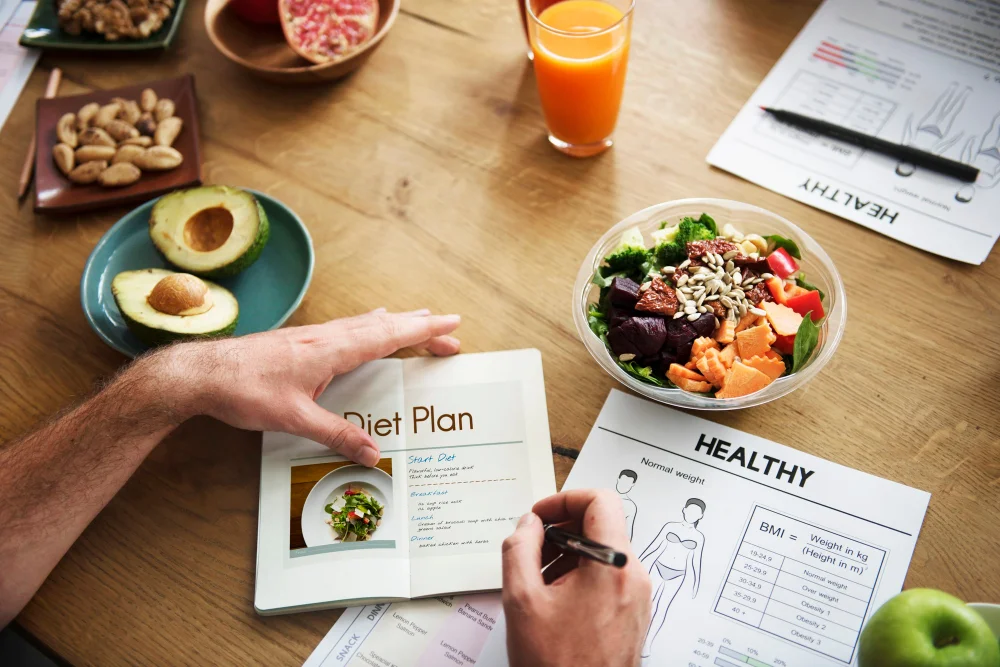
Each day follows the supportive pattern above using widely available foods. Take your levothyroxine on waking with water, then have breakfast 30 to 60 minutes later, keeping coffee or tea until after that gap. South Asian swaps are listed after the plan so you can adapt any day to the food you cook.
Day 1
- Breakfast: Vegetable omelette (2 eggs) with a slice of whole-grain toast.
- Snack: 1 to 2 Brazil nuts and a piece of fruit.
- Lunch: Grilled fish, mixed salad and a small portion of brown rice.
- Snack: A cup of yogurt.
- Dinner: Lentil stew, cooked greens and salad.
Day 2
- Breakfast: Oats cooked with milk, cinnamon, nuts and seeds.
- Snack: An apple or pear.
- Lunch: Chicken and vegetable bowl with a large salad and a whole grain.
- Snack: A boiled egg.
- Dinner: Mixed bean and vegetable curry with salad.
Day 3
- Breakfast: Chickpea flour pancake with yogurt and herbs.
- Snack: A handful of pumpkin seeds.
- Lunch: Baked fish or chicken with cauliflower and beans, plus salad.
- Snack: A guava, orange or berries.
- Dinner: Chickpeas with spinach and salad.
Day 4
- Breakfast: Scrambled eggs with tomato and whole-grain toast.
- Snack: 1 to 2 Brazil nuts.
- Lunch: Lean mince with peas, a large salad and a whole grain.
- Snack: Yogurt with seeds.
- Dinner: Lentils, a cooked vegetable and salad.
Day 5
- Breakfast: Vegetable omelette with a whole grain.
- Snack: A small orange and a few almonds.
- Lunch: Grilled fish, sauteed leafy greens and a small portion of rice.
- Snack: Roasted chickpeas.
- Dinner: Black-eyed peas with mixed vegetables and salad.
Day 6
- Breakfast: Oats with milk, fruit, nuts and seeds.
- Snack: A piece of fruit.
- Lunch: Chicken with vegetables and salad, plus a whole grain.
- Snack: A cup of yogurt.
- Dinner: Lentil soup, a cooked vegetable and salad.
Day 7
- Breakfast: Chickpea pancake or vegetable omelette with yogurt.
- Snack: 1 to 2 Brazil nuts and fruit.
- Lunch: Fish or chicken with mixed vegetables and salad.
- Snack: A handful of walnuts.
- Dinner: Beans or chickpeas with a cooked vegetable and salad.
South Asian swaps: use whole-wheat roti in place of toast or grains, dal for lentil stew and soup, dahi for yogurt, besan cheela for the chickpea pancake, chana or lobia for beans, keema for lean mince, and everyday sabzi such as palak, bhindi, gobi, tori and tinday for the cooked vegetables. A karahi or curry made with less oil fits the plan well.
To build your own balanced days from foods you have at home, our Food Plate Calculator can help.
Lifestyle matters too
Diet is one lever. Adequate sleep, managing stress, and regular gentle activity such as walking all support energy and wellbeing in autoimmune conditions, and deserve as much attention as any single food rule. None of these replace medication or monitoring, but together they help you feel more like yourself.
Common mistakes to avoid
- Taking levothyroxine with breakfast or coffee, which quietly lowers your dose.
- Going gluten-free without testing for celiac disease first.
- Taking high-dose iodine or kelp supplements, which can worsen Hashimoto’s.
- Stopping or reducing thyroid medication because a diet promised a cure.
- Jumping into a very restrictive elimination diet without support or a clear reason.
Read Also: 7-Day Rice Meal Plan: Portions, Balanced Plates, and Safe Meal Prep
How Cure on Call can help
A 7-day template is a starting point. Your thyroid results, your medication, your nutrient levels and your symptoms are personal, and a good plan is built around them. A clinical nutritionist can turn this pattern into a plan that fits your reports and the food you actually eat, while your doctor manages your thyroid medication and bloodwork.
Wherever you are, you can book an online consultation with our clinical nutrition team, and patients in Pakistan can also arrange in-person and home-visit care. Contact us with your latest thyroid results and any supplements you take, so the advice fits your situation.
Frequently asked questions
No. No diet has been proven to cure or reverse Hashimoto’s, and food does not replace thyroid medication. A good diet supports how you feel and your overall health alongside proper medical treatment.
Only clearly if you have celiac disease or a true gluten sensitivity, so get tested first. For Hashimoto’s without celiac disease, the evidence that gluten-free improves thyroid function or antibodies is inconsistent and weak.
Selenium supports thyroid function, and some studies show it can lower thyroid antibodies, though the benefit to how you feel is uncertain. Get it from food such as Brazil nuts, fish and eggs rather than high doses, since excess selenium is harmful.
Yes. Normal, cooked portions of cruciferous vegetables are fine when your iodine is adequate. Soy mainly matters because it reduces medication absorption, so keep it about 4 hours away from your levothyroxine.
No. If your thyroid is underactive, you need replacement hormone. Never stop or change your medication based on a diet. Any medication change is a decision for your doctor based on your blood tests.
Your next step
Managing Hashimoto’s well is not about a magic food or a punishing elimination diet. It is about taking your medication correctly, eating a sensible anti-inflammatory diet that covers the nutrients your thyroid needs, and getting tested before you cut anything out. Use this 7-day plan as your starting pattern, fix your medication timing first, and build the version that fits your body and your reports with a professional who can match it to your numbers.
About the author: DT. Nimra Naqvi holds an MPhil in Clinical Nutrition and works with the Cure on Call team, providing evidence-based nutrition care through online consultations worldwide and in-person care in Pakistan.
This article is educational and does not replace individual medical or dietetic advice. Do not change your thyroid medication based on diet, and speak with your doctor or dietitian before adding supplements or making major dietary changes.

DT Nimra Naqvi is an MPhil-qualified clinical nutritionist specialising in therapeutic, condition-specific nutrition care. She designs personalised nutrition plans for metabolic, hormonal, digestive, and recovery-related conditions, grounded in evidence-based practice. Her work focuses on integrating nutrition with medical treatment and rehabilitation to support sustainable health outcomes. DT Nimra Naqvi provides professional online consultations for international clients across the USA, UK, and Europe.