By Dr. Mustajab Haider Bukhari (PT), Founder, Cure on Call. Reviewed by the Cure on Call physiotherapy team.
Quick answer: Autism very commonly affects how a child moves. Large studies find that around 87 to 88 percent of autistic children are at risk for motor difficulties, spanning gross motor skills, fine motor skills, coordination, balance and motor planning. These difficulties are not part of the formal diagnostic criteria for autism, they are often missed, and they tend to respond well to physiotherapy, occupational therapy and structured physical activity.
When people picture autism, they usually think of communication, social interaction and repetitive behaviours. Movement rarely makes the list. Yet for most autistic children, the way they sit, balance, run, grip a pencil or plan a new action is affected too, and it is one of the most overlooked parts of their development. Understanding this matters, because motor skills quietly shape a child’s play, independence, learning and confidence, and because the right support genuinely helps.
How common are motor difficulties in autism
They are the rule, not the exception. In the large SPARK study of thousands of children with autism, about 87 percent were found to be at risk for a motor impairment, rising to over 88 percent once children with co-occurring cognitive difficulties were included (Bhat, Physical Therapy, 2020). Population data from Australia point the same way, with motor difficulties reported in roughly 79 to 88 percent of autistic children.
Despite being this common, motor impairment is not one of the diagnostic criteria for autism in the DSM-5. It sits in the background as an associated feature, which is part of why it is so easily missed. A child can be assessed, diagnosed and enrolled in therapy with the motor side of their development never formally checked.
The types of motor differences autism can affect
Motor skills are not one thing, and autism can touch several layers at once. The mix is different for every child, which is exactly what you would expect on a spectrum.
Gross motor skills. These are the large movements: walking, running, jumping, climbing, throwing and catching. Difficulties here often show up as clumsiness, an awkward running pattern, trouble with stairs, or hanging back from playground and sports activities.
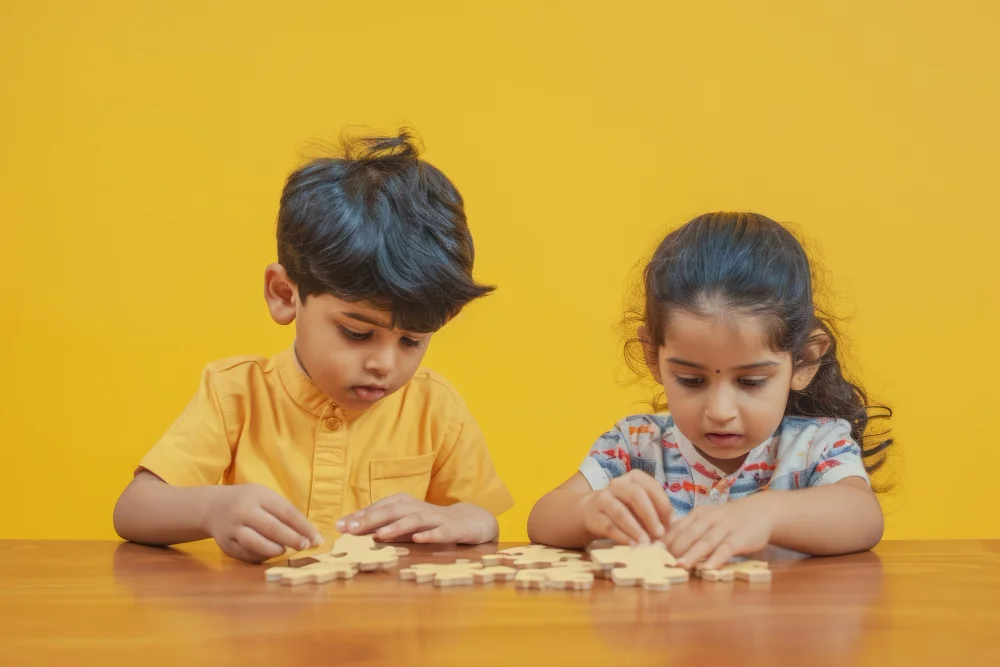
Fine motor skills. These are the small, precise hand movements behind holding a pencil, doing up buttons, using cutlery, cutting with scissors and managing fastenings. They underpin handwriting and many self-care tasks, so difficulties here ripple into school and independence.
Motor planning, or praxis. This is the ability to imagine, plan and carry out a new sequence of movements. Many autistic children score lower on praxis, which makes unfamiliar physical tasks, copying actions, or multi-step movements harder to organise even when the individual muscles work fine.
Muscle tone. Low muscle tone, or hypotonia, is common and can make a child seem floppy, tire quickly, slump in their chair, or need more effort to hold posture.
Balance, coordination and gait. Postural control and balance are frequently affected, and some children show gait differences such as toe-walking or an uneven walking pattern.
Early signs parents sometimes notice
Motor differences are interesting because they can appear early, sometimes before social and communication signs become obvious. A review of the research on infants later diagnosed with autism found that motor delays are a consistent early finding, and that some subtle motor and sensory differences can emerge ahead of social and communication difficulties (motor development review, PMC).
In day-to-day life, the things parents sometimes look back on include reduced arm movement in early infancy, difficulty holding the head steady when pulled up to sit, discomfort or difficulty during tummy time, and later arrival at milestones such as rolling, sitting, crawling, standing and walking. Differences with pointing, clapping, grasping or imitating actions can also be part of the picture.
A word of caution here. Any one of these signs alone is common and rarely means very much, and this list is not a checklist for diagnosing autism or a motor disorder at home. It is a reason to ask for a proper assessment, not to draw a conclusion.
Why motor skills matter more than they seem
It is tempting to treat motor skills as a minor, separate issue. They are not. Movement is woven into nearly everything a child does.
Motor skills are how children join in. A child who cannot reliably catch, balance or keep up physically tends to be left out of games, and play is where much early social learning happens, so motor and social development are linked rather than independent. Fine motor skills drive handwriting and classroom participation. Both gross and fine motor skills underpin self-care and independence, from dressing to eating to managing a school bag. And when movement feels hard or leads to repeated failure, children understandably avoid it, which lowers physical activity, fitness and confidence over time.
These difficulties also tend to persist. Without support, motor challenges identified in early childhood often continue into adolescence, where they can affect daily living skills, physical fitness and mental wellbeing. That is the case for paying attention to them early, not later.
A commonly missed, commonly untreated piece
Here is the gap that matters most for families. Even though the great majority of autistic children have motor difficulties, very few receive movement-focused therapy for them. In the SPARK data, around 85 percent of autistic children were receiving standard services such as speech and language therapy and occupational therapy, but only about 32 percent were receiving physiotherapy and only about 13 percent recreational therapy (Bhat, SPARK service analysis, PMC).
In other words, the motor side is frequently the part of a child’s development that no one is actively working on. For many families, simply getting the motor difficulties assessed and supported is the missing step.
What actually helps
The encouraging part is that motor skills are not fixed. They are learnable, and they improve with the right input. A systematic review of motor and physical activity programs for autistic children found that across 57 studies, these interventions produced positive improvements in motor development (systematic review, PMC). Researchers studying motor and cognitive development in autism make the same core point, that motor skills are highly malleable and can be taught and built (Autism Research Institute).
The main avenues of support are practical and well established:
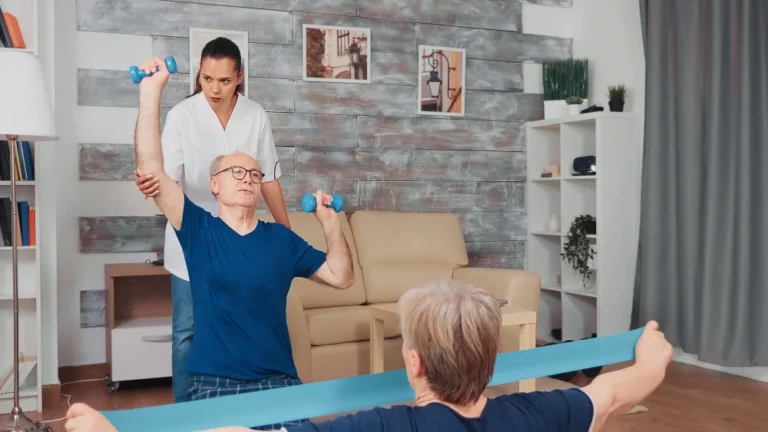
- Physiotherapy targets the gross motor side: strength, posture, balance, coordination, gait and confident movement. It is particularly useful for children who struggle with walking patterns, balance, jumping or keeping up physically.
- Occupational therapy focuses on fine motor skills, hand function, self-care tasks and sensory-motor needs.
- Structured physical activity and motor skill programs, including play-based movement, swimming, cycling and supported sport, build skills while also raising fitness and participation.
Two principles run through all of it. Earlier support tends to work better, because skills build on each other over time. And the goal is participation and independence, helping a child move, play and look after themselves more comfortably and confidently. It is not about making an autistic child appear non-autistic.
Supporting movement at home
Alongside professional input, everyday play helps, especially when it is low-pressure and led by the child’s interests. Climbing, balancing games, ball play, obstacle courses, drawing, threading, playdough and building toys all develop motor skills without feeling like therapy. The aim is frequent, enjoyable, achievable practice rather than drilling. Keep tasks just challenging enough to stretch the child, follow their lead, and celebrate effort over perfection, because a child who enjoys moving will move more, and that is what builds the skill.
When to seek an assessment
Consider a professional assessment if your child is noticeably behind on motor milestones, is much clumsier than peers, tires very quickly with movement, struggles with everyday tasks like dressing or handwriting, or is increasingly avoiding physical play. A developmental paediatrician or qualified clinician can look at the whole picture, and a physiotherapist or occupational therapist can assess and support the specific motor difficulties. If autism itself has not been formally assessed, that evaluation is a separate and important step handled by a developmental or diagnostic team.
Frequently asked questions
Motor difficulties are very common in autism, affecting around 87 to 88 percent of autistic children in large studies. They are considered a frequent associated feature rather than something every autistic child will have, since the spectrum is wide.
No. Despite how common they are, motor impairments are not part of the formal DSM-5 diagnostic criteria for autism, which is one reason they are often overlooked during assessment.
Yes. Motor skills are malleable and respond to practice and intervention. Research across many studies shows that movement-based programs improve motor development in autistic children.
Physiotherapy supports gross motor skills, balance, coordination and gait, occupational therapy supports fine motor and self-care skills, and structured physical activity builds skills while improving fitness and participation.
Toe-walking is one gait difference seen more often in autistic children, but on its own it is not diagnostic. Many children toe-walk for a period without any developmental condition. Persistent toe-walking is worth having assessed.
They can appear early, sometimes in infancy, and can in some cases precede obvious social and communication signs. Milestone delays in sitting, crawling or walking are common early observations.
Where this leaves you and your child
Motor development is one of the most common and least discussed parts of autism, and it is also one of the most responsive to support. Spotting motor difficulties early, having them properly assessed, and building movement into a child’s week through therapy and play can make a real difference to how they participate, learn and feel about themselves.
If your child has gross motor, balance or coordination difficulties and you want to understand what physiotherapy can offer, you can arrange an assessment with the Cure on Call team. We offer home physiotherapy in Faisalabad, which suits younger children in a familiar setting, alongside online physiotherapy consultations and our wider physiotherapy services. For diagnosis and broader developmental support, we will help point you toward the right specialist team. You can contact us to talk through your child’s needs.
About the author: Dr. Mustajab Haider Bukhari (PT) is the founder of Cure on Call and a qualified physiotherapist in Faisalabad, Pakistan, working in musculoskeletal rehabilitation and movement-based recovery through in-clinic, home and online care.
This article is educational and does not replace individual assessment. Autism diagnosis and care should be guided by a qualified developmental or diagnostic team. For motor-specific concerns, speak with a licensed physiotherapist, occupational therapist or doctor.
Read Also: What Is the Latest Treatment for Enlarged Prostate?
Read Also: Sinus Tarsi Syndrome: Causes and Physiotherapy Treatment

Dr. Mustajab Haider Bukhari (PT) is the Founder and Owner of Cure On Call and a qualified physiotherapist based in Faisalabad, Pakistan. He specialises in musculoskeletal rehabilitation, chronic pain management, and post-injury recovery through evidence-based physiotherapy. Dr. Bukhari has extensive experience providing patient-centred care through in-clinic and home-based physiotherapy services. Under his leadership, Cure On Call integrates physiotherapy with nutrition and remote care to deliver holistic, accessible healthcare solutions.