
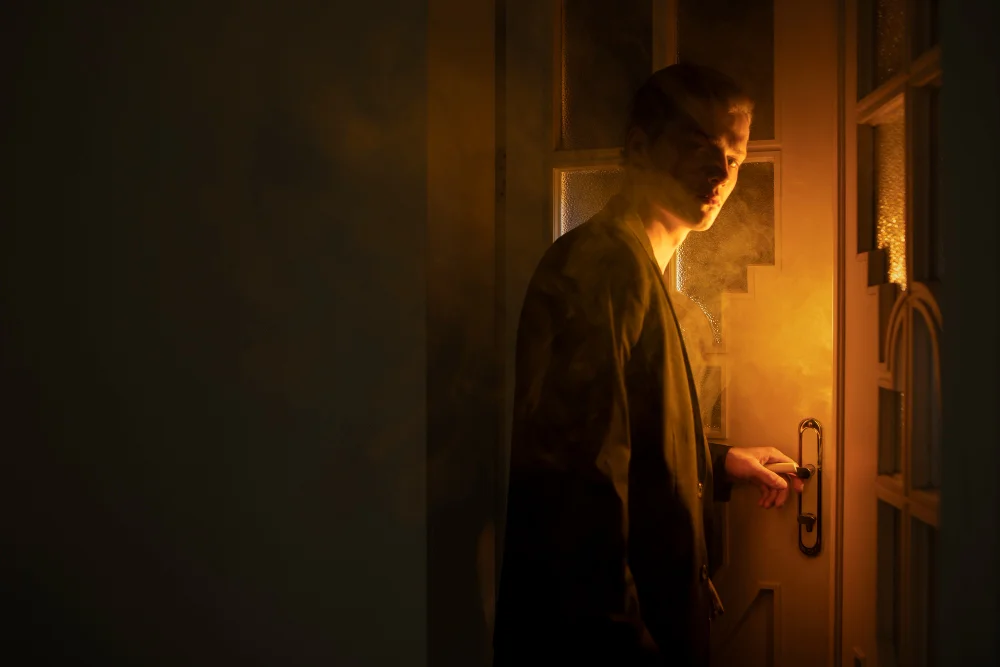
Baby Reindeer, Richard Gadd’s Netflix limited series about being stalked and, in a separate storyline, sexually abused, became one of the platform’s biggest hits of 2024 partly because clinicians said it got the psychology right.
Mental health professionals have pointed to the character Martha as a strikingly accurate depiction of erotomania, a real delusional condition, and praised the show’s nuanced portrayal of why trauma responses, including Donny’s own complicated feelings toward the person stalking him, rarely look the way film and TV usually show them.
What Is Baby Reindeer About?
Baby Reindeer is a seven-episode Netflix limited series, written by and starring Scottish comedian Richard Gadd, that premiered in April 2024 and quickly became one of the platform’s most-watched shows of the year, later winning multiple Emmy Awards. It’s adapted from Gadd’s autobiographical one-man stage show of the same name, and each episode opens with the words “this is a true story,” a framing choice that would later become its own controversy, covered further down.
The series follows Donny Dunn (Gadd), a struggling comedian, through two intertwined ordeals: being stalked for years by a woman named Martha (Jessica Gunning) he meets at the pub where he bartends, and coming to terms with having been groomed and sexually abused earlier in his career by an older, more established writer named Darrien (Tom Goodman-Hill).
Gadd has publicly said his real-life stalker sent him 41,071 emails, 350 hours of voicemails, and hundreds of letters and social media messages over the years, numbers that appear in dramatized form in the show itself.
The Psychology of Martha: Is Erotomania Real?
Yes, and it’s one of the reasons clinicians responded to the show so strongly. Erotomania, sometimes called De Clérambault’s syndrome, is a recognized delusional condition in which a person becomes convinced that another person, often someone of higher status or a near-stranger, is secretly in love with them.
After watching the series, San Francisco therapist Dr. Avigail Lev told TODAY.com she would diagnose the fictional Martha with both erotomania and borderline personality disorder, pointing to the character’s obsessive fixation, letter-writing, and inability to accept rejection as consistent with documented erotomanic behavior.
Forensic psychologists who study real stalking cases have also mapped Martha onto established typologies. Forensic psychologist Troy McEwan has described five recognized categories of stalkers and has characterized a Martha-like figure as an “intimacy-seeking” stalker: someone who has convinced themselves a relationship exists or is destined to exist, and who interprets a target’s discomfort or refusal as an obstacle to overcome rather than a boundary to respect.
A formal review in the Journal of the American Academy of Psychiatry and the Law, one of the field’s most established forensic psychiatry publications, praised the show for portraying a stalker with genuine psychological complexity rather than the one-dimensional “crazy ex” trope common in film and television.
Why Didn’t Donny Leave Sooner? The Psychology of Stalking Victims
One of the show’s most clinically praised choices is refusing to make Donny a simple, uncomplicated victim. He’s shown feeling flattered by Martha’s attention at points, continuing to engage with her, and struggling to get anyone, including the police, to take the danger seriously.
Writing in Psychology Today, one therapist called this one of the more realistic depictions of stalking she’d seen on screen, noting that victims are frequently disbelieved or blamed, especially when the stalker is a woman and the victim is a man, which runs against assumptions about who stalkers and victims are “supposed” to be.
Researchers who study stalking describe this ambivalence as normal rather than a red flag about the victim’s judgment. Fear, guilt, an instinct to de-escalate rather than confront, and even moments of genuine connection can all coexist in the same relationship, particularly when a stalker gradually escalates from ordinary-seeming interest into something threatening.
That gradual escalation is itself part of what makes stalking dangerous and hard to name in the moment: it rarely announces itself.
A related concept sometimes applied to the show is trauma bonding, an attachment that can form toward someone who alternates between causing harm and offering connection or validation, which tends to make leaving psychologically harder rather than easier.
The Darrien Storyline: The Psychology of Delayed Disclosure
The show’s fourth episode, widely singled out by critics and by Gadd himself as the hardest to make, depicts Donny being groomed and raped by Darrien, an older, professionally powerful man in the comedy industry. Gadd has said in interviews that a similar experience happened to him, and that he stayed silent about it for years.
That silence maps onto a well-documented pattern in research on male sexual abuse: men abused by someone with professional or social power over them often take significantly longer to disclose than other survivors, if they disclose at all.
Academic researchers who examined the show’s reception, writing for the outlet The Conversation, connected this to masculinity norms specifically: men are often socialized to equate victimhood with weakness, which research finds makes it harder to name what happened, seek support, or even privately recognize an experience as abuse rather than something to minimize.
Confusion about sexuality, fear of not being believed, and shame are also consistently cited in the disclosure research as reasons male survivors delay coming forward, sometimes for decades.
Gadd has said the response to this storyline has been one of the show’s most meaningful outcomes. He told Deadline that a charity supporting male sexual abuse survivors saw an 80 percent increase in first-time callers after the series aired.
Why the Show Resonated: Trauma, Comedy, and Catharsis
Baby Reindeer is technically a dark comedy, a genre choice that surprised some viewers given its subject matter. Gadd has spoken about this going back to his original stage show: putting his experience of abuse into an earlier comedy special, Monkey See Monkey Do, years before Baby Reindeer existed, is what he’s credited with getting him through it at all. He’s said the way audiences received that early show “saved my life.”
There’s a real psychological logic to that. Using humor to process and communicate difficult experiences is a well-studied coping mechanism, one that can help both the storyteller and the audience approach painful material without becoming overwhelmed by it.
Gadd has also spoken about the toll of revisiting the material to make the Netflix series, describing going into what he called an “obsessive place” while writing it, and noting that cast and crew were visibly affected while filming the show’s most difficult scenes.
For audiences, part of the show’s power seems to be exactly that mix: funny enough to stay watchable, honest enough that, according to Gadd, many viewers said it helped them recognize or understand their own trauma responses for the first time.
The Real-World Aftermath: A Cautionary Tale in Media Psychology
Baby Reindeer’s “this is a true story” opening title had consequences the show may not have fully anticipated. Within days of release, online communities on Reddit and TikTok began trying to identify the real people the characters were based on, and settled on a woman whose life was, by her own account, seriously upended as a result.
She has publicly disputed key details of how she says she was portrayed and filed a defamation lawsuit against Netflix, which was still working its way through a U.S. federal court as of late 2024, with Netflix arguing in court filings that the show was “emotionally true” to Gadd’s experience rather than a literal, fact-checked account.
Whatever the legal outcome, mental health professionals and media critics have pointed to the episode as a case study in the psychology of true-crime-adjacent audiences: the same curiosity and desire for resolution that makes stalking and abuse stories compelling to watch can, unchecked, turn into exactly the kind of unwanted, invasive attention the show itself is about. Several critics have noted the uncomfortable irony directly: a series about the harm of obsessive, uninvited scrutiny led part of its audience to subject a real person to obsessive, uninvited scrutiny.
Frequently Asked Questions
Yes. Erotomania, also called De Clérambault’s syndrome, is a recognized delusional condition involving a fixed, false belief that another person is secretly in love with the sufferer. After watching the series, at least one clinician publicly said the fictional Martha’s behavior was consistent with erotomania alongside traits of borderline personality disorder.
The show says so in its opening title card, and creator Richard Gadd has said it draws on his real experiences of stalking and sexual abuse. Gadd and Netflix have also described it as “emotionally true” rather than a literal record of events, a distinction that became central to a later legal dispute.
Largely, according to researchers who study disclosure patterns. Long delays before disclosure, shame, and confusion are well documented among male survivors, particularly when the abuser holds professional or social power over them, which the show’s Darrien storyline reflects.
The Bottom Line
Baby Reindeer works as psychological drama because it resists tidy explanations: Martha isn’t a cartoon villain, Donny isn’t a clean-cut victim, and the Darrien storyline doesn’t get a redemptive ending.
Mental health professionals responded to it in unusually large numbers partly because it depicts real, documented psychological patterns, erotomania, trauma bonding, delayed disclosure, rather than dramatized shortcuts. That realism is also what makes the show worth engaging with critically rather than as true crime to be solved: the same instinct that makes an audience want to identify the “real” Martha or Darrien is worth noticing in yourself, not acting on.
Sources
- What Is Martha’s Diagnosis in ‘Baby Reindeer’? A Psychologist Explains. TODAY.com.
- Baby Reindeer: how the Netflix TV show brings a fresh perspective to male sexual victimisation. The Conversation.
- Netflix’s ‘Baby Reindeer’ Highlights Dangers in Stalking. Psychology Today.
- Baby Reindeer Review: The Interwoven Psyches of a “Stalker” and Her Prey. Journal of the American Academy of Psychiatry and the Law.
- Baby Reindeer To Real Life: Psychologist Explains 5 Types Of Stalkers.
- Baby Reindeer creator Richard Gadd says telling story about sexual assault ‘saved my life.’ The Independent, via AOL.
- Baby Reindeer’s Richard Gadd opens up about Netflix controversy. The Independent, via AOL.
- Richard Gadd says Baby Reindeer crew cried while filming traumatic fourth episode. The Independent, via AOL.
- Netflix’s Motion to Dismiss ‘Baby Reindeer’ Lawsuit Denied by Judge. Rolling Stone.
- Netflix loses bid to toss out Baby Reindeer defamation lawsuit. Malay Mail, via AFP.
Read Also: What is the Psychology Behind Masochism: What Research Actually Shows | Panic Attack vs Anxiety Attack: What’s the Difference and What to Do

Hijab Zehra is an MPhil-qualified clinical psychology professional with an academic background in mental health, emotional wellbeing, behavioural patterns and psychological assessment. Her work focuses on helping individuals understand anxiety, mood changes, stress responses, emotional regulation and the psychological factors that affect daily functioning. Through CureOnCall, she contributes to patient-friendly mental health content that explains complex psychological concerns in a clear, practical and supportive way.