
Reviewed by Psy. Hijab Zehra (MPhil Clinical Psychology), Clinical Psychologist at CureOnCall
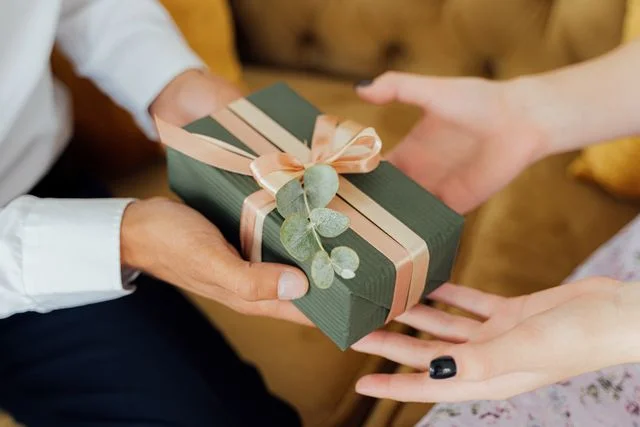
In relationships, gift-giving is a form of emotional communication. A well-chosen gift signals attention, understanding and commitment, while a mismatched one can quietly signal the opposite. Psychologically, gifts act as symbols of how well one partner knows and values the other — which is why they carry weight far beyond their price tag, and why the “wrong” gift can sting so much more than its cost would suggest.
Most of us have felt both sides of this. The glow of being handed something that shows your partner truly gets you, and the small, confusing disappointment of unwrapping something that feels off — even when you know they meant well. This article unpacks what is actually happening beneath those moments: what gifts communicate, why thoughtful people so often miss, and what the psychology of gift-giving reveals about a relationship.
Why gifts carry so much emotional weight
A gift is rarely just an object. As Psychology Today notes, gifts hold deep symbolic and emotional significance, serving as tools for connection, care and even relationship management — a single gift can express love and shared memories, or it can create stress and obligation. In close relationships, we treat a gift as information: evidence of how much thought, attention and effort a partner is willing to invest in us.
This is why the emotional stakes are high. When a partner gives us something that fits, we read it as proof of attentiveness — “you were thinking about me, and you understood what I’d love.” When the gift misses badly, part of us hears a harder message — “you didn’t quite see me.” The item is small; the meaning we attach to it is not.
There is also a genuine well-being dimension to giving. A widely cited 2008 study by Dunn, Aknin and Norton, published in Science, found that spending money on others was associated with greater happiness than spending it on oneself — a phenomenon researchers call prosocial spending. Later replications have produced mixed effect sizes, so it is best understood as a real but nuanced pattern rather than a guarantee. Still, the core idea holds up in relationships: giving to someone we love can strengthen our own sense of connection and warmth, not just theirs.
What a gift actually communicates between partners
Strip away the wrapping and most relationship gifts are trying to say one of a few things:
- “I know you.” The gift reflects the recipient’s specific tastes, needs or inside jokes.
- “I was paying attention.” It references something mentioned weeks ago, or a problem quietly solved.
- “You matter enough for effort.” Time, thought and planning are the real currency, not rupees.
- “We share this.” The gift points to a shared memory, a private meaning, or a future together.
Crucially, the recipient’s reaction is what determines whether the message lands. Gifts that match expectations and the relationship’s context tend to foster positive emotions, while thoughtless or off-key choices can strain the bond. The same wrapped box can read as devotion or as distance depending entirely on how well it fits the person opening it.
The giver’s paradox: why your “thoughtful” gift can miss
Here is the most useful — and most counter-intuitive — finding in the whole field. Givers and receivers systematically disagree about what makes a good gift, and givers are usually the ones who get it wrong.
In a set of five studies, researchers Francesca Gino and Frank Flynn found that recipients appreciated gifts they had explicitly requested more than “thoughtful” unsolicited gifts — yet givers assumed both types would be equally appreciated. We resist asking what someone wants because it feels lazy or unromantic, so we guess instead, trying to prove how well we know them. The recipient, meanwhile, would simply have preferred the thing they actually asked for. Strikingly, the same research found people often appreciated money even more than an unrequested gift — the opposite of what most givers expect.
The mismatch runs deeper than wish lists. A study led by Yale’s Nathan Novemsky and Ernest Baskin showed that givers tend to choose desirable gifts (impressive, high-status, exciting) while receivers actually prefer practical, feasible ones they will use. The classic example: a giver picks the fancier restaurant an hour away to seem generous; the recipient would rather have the good restaurant five minutes from home. And earlier work by Flynn and Adams found givers assume more expensive gifts are more appreciated — while recipients feel no such link between price and gratitude.
The practical lesson for couples is liberating: your partner is not secretly judging the price or cleverness of your gift the way you fear. They mostly want to feel understood and to receive something that fits their real life. Asking is not unromantic — it is accurate.
Gifts as a love language
The popular “five love languages” framework treats receiving gifts as one of five ways people feel loved, alongside quality time, words of affirmation, acts of service and physical touch. The idea is not heavily validated as a rigid scientific model, but it captures something real that clinicians see often: people differ in which expressions of love register most strongly for them.
For a partner whose primary language is gifts, a forgotten anniversary present is not about the object — it can feel like an absence of love itself. For a partner who barely registers gifts but lights up at undivided attention, an expensive present may land flat while a phone-free evening means everything. Many gift-related hurts in relationships are really translation errors: one partner expressing love fluently in a language the other doesn’t primarily speak. Recognising your partner’s actual love language often matters more than the size of the gesture.
How attachment styles shape gift-giving and receiving
Our earliest experiences of care shape an attachment style that quietly influences how we give and receive throughout adult relationships.
- Securely attached partners tend to experience gift-giving as a natural, low-stakes expression of care. They can give freely and receive graciously without reading catastrophe into an imperfect present.
- Anxiously attached partners may over-analyse gifts as a measure of love and commitment, scanning them for reassurance. A gift that feels “less than” last year’s can trigger fears about the relationship’s security.
- Avoidantly attached partners may feel pressured or uncomfortable with the expectations around gift-giving, sometimes downplaying occasions or keeping gestures deliberately light to preserve a sense of independence.
None of these patterns is a character flaw; they are learned strategies for managing closeness. But when two partners with different styles collide over gifts — one seeking reassurance, the other resisting pressure — the conflict is rarely about the gift at all. It is about safety, closeness and how each person learned to handle both. If gift-related tension keeps recurring and pointing to these deeper patterns, structured online relationship and couples counselling can help both partners understand what is really being negotiated.
The cultural layer: gift-giving in Pakistani and South Asian relationships
Gift-giving never happens in a vacuum — it sits inside cultural scripts, and in Pakistan those scripts are especially rich. Weddings, Eid, mehndi and family visits come with layered expectations around who gives what, to whom and how visibly. Reciprocity is deeply woven in: gifts flow between families, not just individuals, and a gesture can carry meaning for an entire extended network.
This adds beauty but also pressure. Partners may inherit very different family norms about generosity, obligation and display — one raised where lavish, public giving signals respect, another where quiet practicality is the value. Money and status can become entangled with love in ways that create friction inside a marriage. Naming these inherited scripts, rather than assuming your partner shares them, prevents a lot of unspoken resentment. The goal is not to abandon culture but to understand which expectations you have each absorbed, and to choose together which ones actually fit your relationship.
When gift-giving becomes a problem
Gifts strengthen bonds when they flow from genuine care. They start to damage relationships when they become something else:
- Transactional gifting — gifts given to obtain something, settle a score, or reset the balance after conflict, rather than to express care.
- Obligation and keeping score — tracking who gave what and when, so generosity turns into an accounting exercise that breeds quiet resentment.
- Gifts replacing repair — using presents to smooth over hurt without ever addressing the underlying issue, so the same problem returns.
- Gifts as control or manipulation — using generosity to create indebtedness, guilt or leverage over a partner.
- Gift anxiety — dreading occasions, over-spending to prove love, or panicking about “getting it wrong,” often linked to anxious attachment or low self-worth.
When gift-giving is consistently loaded with anxiety, obligation or conflict, it is usually a symptom rather than the cause. Persistent gift-related stress can be tied to broader patterns worth exploring with a professional — whether that is anxiety and overthinking or self-esteem and personal growth.
What research says about giving better gifts
The behavioural science points to a few clear, relationship-friendly habits:
- Ask, or use their list. Recipients appreciate requested gifts more and — contrary to what givers fear — see them as just as thoughtful. Asking signals care, not laziness.
- Favour practical over impressive. Your partner will likely value something they will actually use over something designed to look generous.
- Don’t equate price with love. Recipients don’t link cost to appreciation the way givers assume. Thought and fit beat expense.
- Learn their love language. For some partners, presence, words or help will move them far more than any wrapped item.
- Give from care, not obligation. A small gesture offered freely communicates more than a large one given to keep score.
The through-line is simple: shift from “How do I impress?” to “What would genuinely make their life better or make them feel seen?” That single reframe resolves most gift-giving friction.
When gift conflicts point to something deeper
Sometimes recurring fights about gifts — feeling unappreciated, unseen, over-pressured or taken for granted — are not really about gifts. They are the visible edge of deeper patterns: mismatched love languages, attachment insecurities, unspoken expectations, or old wounds around worth and care. When those patterns keep surfacing, talking them through with a qualified professional can help both partners understand what is actually being communicated beneath the gestures.
CureOnCall offers confidential, online psychologist consultations with a qualified clinical psychologist, delivered by secure video for clients across Pakistan and internationally. Sessions are structured, assessment-led and judgement-free — a private space to understand the emotional patterns in your relationship, not just the surface arguments. If you would like to start, you can book a consultation or explore the full range of clinical psychology services.
Frequently Asked Questions
Because we read gifts as information about how well a partner knows, notices and values us. The object is small, but the meaning attached to it — attention, understanding, commitment — is large, which is why a good gift feels affirming and a mismatched one can feel like being unseen.
Research shows givers and receivers disagree about what makes a good gift. Givers favour impressive, unsolicited or expensive gifts, while receivers usually prefer practical things they asked for or will genuinely use — and they don’t link price to appreciation the way givers assume.
No. Studies find recipients appreciate requested gifts more and consider them just as thoughtful as surprises. Asking signals that you care about getting it right, not that you know your partner less well.
It can reflect love languages, attachment styles and unspoken expectations. Healthy gifting expresses care freely; when gifts become transactional, obligatory, or a way to keep score or avoid repair, they often signal deeper patterns worth exploring.
Yes. Partners often have different love languages, family scripts and attachment needs. When one seeks reassurance through gifts and another feels pressured by them, the conflict is usually about closeness and security rather than the gift itself.
This article is for general educational purposes and does not replace personalised psychological assessment or advice. CureOnCall provides non-emergency psychological support; in a crisis or emergency, contact local emergency services (in Pakistan, 1122) or your nearest hospital.
Read Also: What is the Psychology Behind Self-Harm: What Research Actually Shows | What is the Psychology Behind Foot Fetishes: What Research Actually Shows

Hijab Zehra is an MPhil-qualified clinical psychology professional with an academic background in mental health, emotional wellbeing, behavioural patterns and psychological assessment. Her work focuses on helping individuals understand anxiety, mood changes, stress responses, emotional regulation and the psychological factors that affect daily functioning. Through CureOnCall, she contributes to patient-friendly mental health content that explains complex psychological concerns in a clear, practical and supportive way.