
Medical Disclaimer: This article is written for informational purposes only and does not replace personalized medical or dietary advice. Consult a registered dietitian or your healthcare provider before starting any restrictive diet plan.
Is 30 Day Chicken and Rice Diet Good for You?
Chicken and rice. Clean. Simple. Affordable.
It sounds like the most sensible diet in the world — and for about the first ten days, it probably is. The appeal makes complete sense. You are not counting macros, not following a complicated eating window, not buying expensive supplements. You are just eating two foods that have been fitness staples for decades.
But what actually happens when you extend this for a full thirty days?
That is the question most fitness content skips. They tell you the protein content of chicken breast. They explain that brown rice has fiber. Then they quietly move on before explaining what your body does when you restrict it to just two foods for an entire month.
At CureOnCall, our nutrition team has reviewed the clinical evidence — and the picture is more nuanced than most social media challenges would have you believe. Here is what you actually need to know.
For personalised dietary guidance based on your health goals, lifestyle, and medical needs, you can consult a qualified professional through our online nutrition consultation services.
What Is the 30-Day Chicken and Rice Diet?
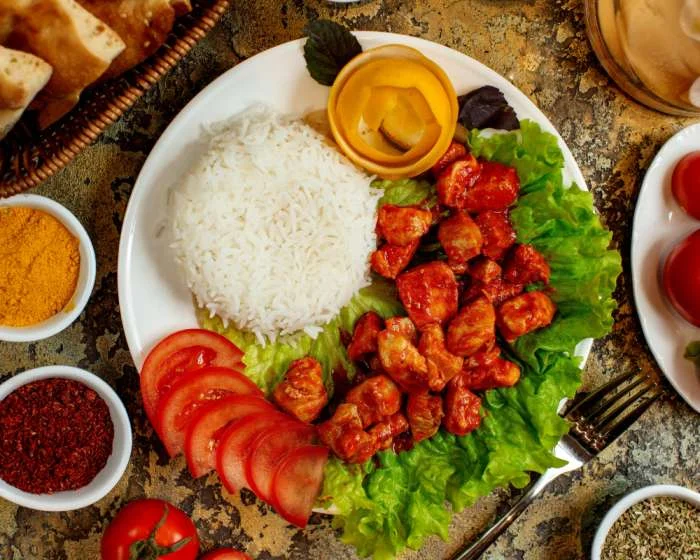
The chicken and rice diet is exactly what it sounds like: a period of eating primarily — sometimes exclusively — chicken and rice for every meal, for thirty days.
It gained popularity through bodybuilding culture. Competitive athletes needed a cheap, lean, high-protein eating pattern that was easy to meal-prep and did not require much thought. Chicken breast delivers around 31 grams of protein per 100 grams. White rice provides quick carbohydrate energy. Together, they tick the muscle-building and calorie-control boxes in one simple combination.
From there, it spilled into mainstream diet culture. YouTube challenges, social media transformations, and fitness influencers all helped push the idea that thirty days on this combo could be a kind of “reset.” Strip everything back. Eat clean. See results.
The logic is not wrong, exactly. The problem is that thirty days is a long time to operate on a significantly restricted nutritional input.
What Are the Actual Benefits?
Let us be fair. There are real, evidence-backed reasons why chicken and rice works — especially in the short term.
High-Quality Protein Supports Muscle Retention
Chicken breast is one of the most complete protein sources available. It contains all nine essential amino acids, making it what nutritionists call a “complete protein.” For anyone trying to lose weight while keeping muscle — or anyone in active training — this matters enormously.
A 2024 systematic review and meta-analysis published in Clinical Nutrition ESPEN found that enhanced protein intake during calorie restriction significantly improved muscle mass preservation and physical function in overweight and obese adults. High-protein eating is not just for bodybuilders. It protects muscle tissue during weight loss in the general population too.
Chicken sits comfortably in this category. A standard 150-gram serving of grilled chicken breast provides roughly 45–48 grams of protein. For someone eating two or three meals per day, that alone can meet or exceed the 1.2–1.6 g/kg body weight protein target recommended for active individuals.
Controlled Calorie Environment
One underrated benefit of this diet is that it removes decision fatigue entirely. You know exactly what you are eating. You are not standing in front of the fridge at 11pm trying to make a choice.
This matters for weight loss. Research consistently shows that dietary adherence — not the specific diet itself — is the strongest predictor of results. A simple eating plan that a person actually follows will outperform a complex plan that is abandoned after a week.
For people who struggle with overcomplicated meal plans, the chicken and rice diet removes friction. That is genuinely useful.
Budget-Friendly and Easy to Meal-Prep
Both chicken and rice are among the most affordable protein and carbohydrate sources available. This makes the diet accessible to people who cannot afford specialty diet foods, supplements, or meal delivery services — which describes a significant portion of people trying to lose weight.
Batch-cooking a week’s worth of meals takes about an hour. That simplicity is not trivial. Meal prep consistency is one of the most evidence-supported behavioral strategies in nutritional research.
Gentle on the Digestive System
Both chicken and white rice are easy to digest. White rice in particular is often recommended for patients recovering from gastrointestinal illnesses because it places minimal demand on the gut. For people with irritable bowel syndrome or other digestive sensitivities, the low-fiber, low-residue nature of plain chicken and white rice can actually reduce symptoms in the short term.
This is also one reason the combination has been used medically — though, as we will explain, the absence of fiber becomes a genuine problem when extended beyond a few days.
Where the 30-Day Version Starts to Break Down
The benefits above are real. But they describe what happens when chicken and rice is part of a diet — not when it is the entire diet, every meal, for thirty consecutive days.
The Micronutrient Gap Is Significant
Chicken and rice provide protein and carbohydrates well. They do not provide much else.
Look at what is missing when both foods are eaten exclusively:
- Vitamin C — essentially absent. Deficiency can develop within weeks.
- Vitamin A — not found in meaningful amounts in either food.
- Vitamin D — absent from both. A widespread deficiency even in normal diets.
- Omega-3 fatty acids — not present in chicken breast or white rice.
- Calcium — minimal. Long-term deficiency contributes to bone loss.
- Iron (non-haem) — rice contains some, but absorption without vitamin C is poor.
- Folate and B12 — present in chicken but absent from rice; adequate but not well-rounded.
- Magnesium and Zinc — borderline levels in a chicken-rice exclusive diet.
Eating only chicken and rice, without adding vegetables or healthy fats, can lead to micronutrient gaps and essential fatty acid deficiencies. After thirty days, these gaps are not theoretical. They translate into real symptoms: fatigue, dry skin, impaired wound healing, reduced immune function, and hair loss.
In more severe cases, nutritional deficiencies can lead to more serious health problems. Hair loss, skin problems, and impaired immune function are possible with prolonged restriction.
White Rice and Blood Sugar
White rice has a high glycemic index — 64, compared to brown rice at 55 — which means it spikes blood sugar more quickly. Diets higher in white rice have been linked to a higher risk of type 2 diabetes and metabolic syndrome. Whereas, brown rice intake is associated with a reduced risk of type 2 diabetes.
For someone eating white rice three times per day for thirty days, this repeated blood sugar elevation is not without consequence — particularly for anyone with pre-diabetes, insulin resistance, or a family history of type 2 diabetes.
This does not mean white rice is dangerous for everyone. But it does mean it is the wrong rice to use exclusively in a thirty-day protocol for metabolic health goals.
Fiber Deficiency and Gut Microbiome Impact
White rice, in particular, is low in fiber, which is essential for maintaining digestive health and promoting satiety.
Dietary fiber is not just about preventing constipation. It feeds the beneficial bacteria in your gut — the organisms that regulate immune function, inflammation, mood (via the gut-brain axis), and even metabolic rate. A fiber-poor diet rapidly alters the gut microbiome in ways that are measurable within days.
Research published in Nature in 2025, using data from over 34,000 participants, confirmed strong associations between dietary diversity — particularly plant food diversity — and favorable gut microbiome composition linked to lower body mass index and reduced disease risk. Thirty days of a chicken-and-rice-only diet moves in the opposite direction of every finding in that literature.
The lack of fiber in this type of diet can lead to digestive issues such as constipation or bloating. These are among the earliest and most consistent complaints from people who attempt the thirty-day version.
Metabolic Adaptation: The Problem Nobody Talks About
Very low-calorie, highly monotonous diets can trigger metabolic adaptation — the body’s protective response to perceived famine. When caloric intake drops significantly and variety disappears, the body becomes more efficient at storing energy. Resting metabolic rate can decrease.
Extremely low calorie diets can have serious health effects over time, including slowed metabolism, decreased muscle mass, fatigue, and dizziness — all of which can negatively impact overall health and wellbeing.
This is particularly counterproductive for anyone approaching this diet as a weight loss strategy. The short-term loss is real. The metabolic slowdown that follows often reverses those results after the diet ends — especially if the transition back to normal eating is abrupt.
Psychological Cost and Rebound Risk
Diet monotony has a well-documented psychological toll. Eating the same two foods every day, across every meal, for thirty days is — for most people — genuinely difficult to sustain without triggering what researchers call “dietary fatigue.”
Consuming the same foods daily can become monotonous and may lead to boredom. This could result in the temptation to indulge in unhealthy food choices, negatively impacting health and fitness goals.
The pattern is predictable: strict restriction for several weeks, followed by intense cravings, followed by a rebound where the person overconsumes the very foods they were avoiding. The net result — nutritionally and psychologically — is often worse than if they had followed a moderate, varied plan from the start.
Who Should Not Do This Diet
Some people should approach the thirty-day version with particular caution or avoid it entirely.
Do not attempt this without medical supervision if you:
- Have type 2 diabetes or insulin resistance (white rice will repeatedly spike blood sugar)
- Have kidney disease (high daily protein loads strain compromised kidneys)
- Are pregnant or breastfeeding (micronutrient requirements are significantly higher)
- Are an adolescent (growth requires a wide range of nutrients)
- Have a history of disordered eating (restrictive single-food diets often trigger relapse)
- Have existing hormonal conditions, particularly thyroid or adrenal disorders
- Are on medications affected by dietary changes (warfarin, metformin, and others)
Individuals with kidney disease should be cautious due to the high protein content of chicken, which can strain the kidneys. People with diabetes need a balanced diet to regulate blood sugar levels, and this restrictive diet could cause dangerous fluctuations.
What Happens Week-by-Week: A Realistic Picture
Most people who have done this diet report a pattern that follows a fairly consistent arc.
Week One: Energy is usually reasonable. Weight loss starts almost immediately — mostly water weight as glycogen stores deplete. Protein intake is high, so muscle tissue is protected. Digestive slowdown begins.
Week Two: Cravings appear. Some people notice dry skin or a dull headache. Weight loss continues but slows. Fiber absence is now noticeable.
Week Three: This is where most people struggle. Monotony becomes a real psychological challenge. Fatigue is common. Some people notice hair feeling more brittle. The scale may plateau.
Week Four: For those who complete it, the final week is often driven by willpower alone, not comfort. Some report mood dips, which aligns with omega-3 deficiency and reduced dietary variety affecting neurotransmitter precursors.
After completion: Without a deliberate transition plan, many people experience significant dietary rebound. The weight lost — much of it water and glycogen — often returns within weeks.
How to Make It Smarter: The Modified Version
If the simplicity of chicken and rice genuinely appeals to you, you do not have to abandon the concept. You need to expand it enough to cover the nutritional gaps.
Use chicken and rice as a base — not the entire diet.
Here is what adding just a few foods does for the nutritional profile:
| Addition | What It Fixes |
|---|---|
| Broccoli or spinach (one cup/day) | Vitamin C, folate, iron absorption, fiber |
| Avocado or olive oil (one serving/day) | Omega-3s, fat-soluble vitamin absorption |
| Brown rice instead of white | Lower GI, more fiber, more B vitamins |
| One boiled egg | Vitamin D, choline, healthy fat |
| Greek yogurt (one serving/day) | Calcium, probiotics, additional protein |
| Garlic and turmeric in cooking | Anti-inflammatory compounds at no real calorie cost |
This is not a complicated overhaul. It takes the core simplicity of chicken and rice and fills the five or six gaps that make a thirty-day exclusive version problematic.
The goal is to eat mostly chicken and rice — with vegetables and a small fat source at every meal. That version is nutritionally defensible. The exclusive version is not.
A Sample Modified 30-Day Chicken and Rice Meal Plan (3 Days)
Day 1
Breakfast: Scrambled eggs (2) with a handful of spinach and a small portion of leftover brown rice from dinner.
Lunch: Grilled chicken breast (150g), brown rice (100g cooked), steamed broccoli with olive oil and lemon.
Dinner: Chicken and rice bowl with sliced avocado, cucumber, and a sprinkle of sesame seeds. Season with turmeric, cumin, and garlic.
Day 2
Breakfast: Greek yogurt (150g) with a small portion of rice (as a base) and a handful of berries if available.
Lunch: Baked chicken thigh (skin removed), brown rice, roasted sweet pepper strips, and a drizzle of olive oil.
Dinner: Chicken stir-fry with whatever vegetables are available — cabbage, carrots, or zucchini work well — over rice. Use low-sodium soy sauce or lemon juice instead of heavy sauces.
Day 3
Breakfast: Boiled egg with a small bowl of rice and a sliced tomato. Simple, filling, nutritionally broader.
Lunch: Chicken and rice soup — make a simple broth with chicken, rice, spinach, garlic, and ginger. This covers protein, carbohydrates, fiber, and anti-inflammatory compounds simultaneously.
Dinner: Grilled chicken strips with brown rice and a side of roasted broccoli and cauliflower. Squeeze lemon over everything.
These three days are still fundamentally chicken-and-rice-centered. But they avoid the critical deficiency gaps that make the exclusive version unsustainable.
What the Clinical Evidence Actually Recommends
Relying solely on chicken and rice can lead to nutrient deficiencies and may not be suitable for everyone. It is always advisable to consult with a healthcare professional or registered dietitian before starting any new diet plan.
This is not legal boilerplate. It is the right call for a specific reason: the appropriateness of any restrictive diet depends on your starting point.
Someone with good baseline nutrition, no metabolic conditions, and thirty days of discipline can do a modified chicken-and-rice protocol and see real, sustainable results. Someone with an underlying vitamin D deficiency — extremely common in Pakistan and other South Asian populations — who then follows an exclusive version for thirty days is compounding an existing problem.
A registered dietitian at CureOnCall can assess your starting nutritional status, adjust targets based on your activity level and health history, and design a protocol that actually fits your body — not just a generic internet challenge.
FAQs
Yes, most people do. The combination is lower in calories than most typical diets and the high protein content supports satiety. However, much of the initial weight loss is water weight. Sustainable fat loss requires a caloric deficit maintained over time — which the modified version of this diet can support if structured correctly.
Chicken provides excellent muscle-building protein. But muscle growth also requires healthy fats for hormone production (particularly testosterone), carbohydrates to fuel training, and micronutrients involved in protein synthesis — like zinc and magnesium. The exclusive version limits these. The modified version, particularly with brown rice and added vegetables, supports muscle building reasonably well.
Brown rice every time for a thirty-day protocol. Brown rice intake is associated with a reduced risk of type 2 diabetes, and it retains the hull that provides additional vitamins and minerals not found in white rice. It also has more fiber, which helps with satiety and gut health. White rice is fine occasionally or post-workout — not as the exclusive carbohydrate for thirty days.
For most adults aiming for weight loss with muscle retention, 150-200 grams of chicken breast per meal, across two to three meals per day, provides adequate protein (approximately 1.6-2.0g per kg of body weight). Exact targets depend on your body weight and activity level — a dietitian can help you calculate this properly.
The Bottom Line: Should You Try It?
Thirty days of exclusively chicken and rice? No — not if you want it to actually work long-term. The micronutrient gaps are real, the fiber absence causes measurable gut disruption, and the psychological monotony makes completion difficult and rebound likely.
Thirty days of chicken and rice as a dietary foundation — with vegetables, a small fat source, and brown rice? That is a different answer. That version is practical, affordable, nutritionally defensible, and likely to produce results you can sustain past day thirty.
The diet is not bad. The exclusive version of the diet is the problem.
At CureOnCall, our nutrition specialists work with patients to design structured eating plans that are simple enough to follow and complete enough to work. If you want a personalized version of a high-protein, simplified diet built around your health history and goals — book a nutrition consultation online and we will design one that actually fits you.
References
- Moon, J., & Koh, G. (2020). Clinical evidence and mechanisms of high-protein diet-induced weight loss. Journal of Obesity & Metabolic Syndrome, 29(3), 166–173. https://doi.org/10.7570/jomes20028
- Carbone, J.W., & Pasiakos, S.M. (2019). Dietary Protein and Muscle Mass: Translating Science to Application and Health Benefit. Nutrients, 11(5), 1136. https://doi.org/10.3390/nu11051136
- Clinical Nutrition ESPEN (2024). Enhanced protein intake on maintaining muscle mass, strength, and physical function in adults with overweight/obesity: A systematic review and meta-analysis. https://www.clinicalnutritionespen.com/article/S2405-4577(24)00176-1/abstract
- Krittanawong, C. et al. (2017). Is white rice consumption a risk for metabolic and cardiovascular outcomes? A systematic review and meta-analysis. American Journal of Cardiology. https://doi.org/10.1016/j.amjcard.2017.06.007
- Sonnenburg, J. et al. (2021). Gut-microbiota-targeted diets modulate human immune status. Cell, 184(16), 4137–4153. https://doi.org/10.1016/j.cell.2021.06.019
- Xu, Z., & Knight, R. (2015). Dietary effects on human gut microbiome diversity. British Journal of Nutrition, 113(S1), S1–S5. https://doi.org/10.1017/S0007114514004127
- ZOE Microbiome Health Ranking 2025. Nature (2025). Gut micro-organisms associated with health, nutrition and dietary interventions. https://www.nature.com/articles/s41586-025-09854-7
Reviewed by the CureOnCall Nutrition Team. CureOnCall provides online physiotherapy, nutrition, and psychology consultations in Pakistan. To speak with a registered dietitian, visit cureoncall.com.
Read Also: Chicken Noodle Soup Diet: Comfort, Health, and Science Behind the Bowl
Read Also: Best 4500 Calorie Diet Plan – A Complete Guide by Cure On Call

DT Nimra Naqvi is an MPhil-qualified clinical nutritionist specialising in therapeutic, condition-specific nutrition care. She designs personalised nutrition plans for metabolic, hormonal, digestive, and recovery-related conditions, grounded in evidence-based practice. Her work focuses on integrating nutrition with medical treatment and rehabilitation to support sustainable health outcomes. DT Nimra Naqvi provides professional online consultations for international clients across the USA, UK, and Europe.