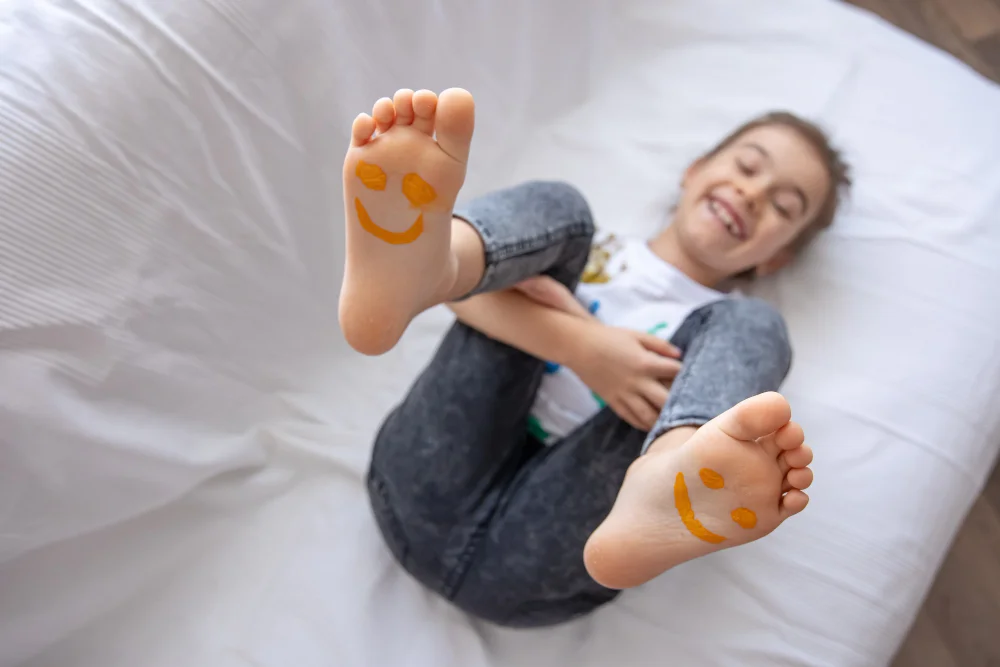
Are you sure that the itching between your child’s toes is just poor hygiene — or could it be something more persistent?
I still remember a concerned parent bringing her eight‑year‑old son to a physiotherapy clinic where I was observing paediatric rehabilitation sessions. She was convinced his constant foot scratching was due to sweaty school shoes. What surprised her — and many parents since — was learning that athlete’s foot (tinea pedis) is not only common in adults but increasingly diagnosed in children, particularly those who are physically active, attend swimming classes, or wear closed footwear for long hours.
This article draws on clinical evidence, paediatric physiotherapy practice, dermatology research, and real‑world observations to explain how athlete’s foot affects children — and, importantly, how physiotherapy plays a supportive yet under‑discussed role in both treatment and prevention. If you are a parent, healthcare student, or practitioner, this guide is designed to be practical, credible, and immediately useful.
What Is Athlete’s Foot in Children?
Athlete’s foot is a fungal infection of the skin, most commonly caused by dermatophytes such as Trichophyton rubrum. While the name suggests a condition limited to athletes, this infection thrives in warm, moist environments — exactly the conditions created by school shoes, sports socks, and poorly ventilated footwear.
In children, athlete’s foot often presents differently than in adults, which is why it is sometimes overlooked or misdiagnosed.
Common Symptoms in Children
Children may experience:
- Persistent itching or burning between toes
- White, soggy skin or peeling in the toe webs
- Redness or fine cracking on the soles
- Mild discomfort while walking or running
Unlike adults, children may not always verbalise discomfort clearly. Instead, parents notice behavioural changes — reluctance to wear shoes, frequent scratching, or complaints after sports activities.
According to the British Association of Dermatologists, fungal foot infections in children are underreported, partly because early symptoms resemble eczema or contact dermatitis.
Why Athlete’s Foot Matters More Than We Think
At first glance, athlete’s foot appears to be a minor skin problem. However, untreated or recurrent infections can lead to:
- Secondary bacterial infections through broken skin
- Spread to toenails (onychomycosis)
- Altered gait due to discomfort
- Reduced participation in physical activity
From a physiotherapy perspective, anything that affects how a child walks, runs, or bears weight deserves attention. Subtle avoidance patterns — walking on the outer foot or lifting toes unnaturally — can, over time, influence posture and lower‑limb mechanics.
Standard Medical Treatment: What Actually Works
Most paediatric cases are managed medically, and rightly so.
Antifungal Treatments
First‑line treatment typically includes:
- Topical antifungal creams (e.g., clotrimazole, terbinafine)
- Application for 2–4 weeks, even if symptoms improve earlier
Dr Caroline Murphy, Consultant Dermatologist at Guy’s & St Thomas’ NHS Foundation Trust, notes in a 2023 clinical briefing:
“The most common reason for recurrence in children is stopping antifungal treatment too early, once itching subsides.”
Oral antifungals are rarely required in children unless the infection is severe or nail involvement occurs.
Hygiene Advice (Often Underestimated)
Parents are usually advised to:
- Dry feet thoroughly, especially between toes
- Rotate shoes to allow complete drying
- Avoid sharing towels or footwear
However, this is where physiotherapy begins to add value, especially for active or sports‑involved children.
The Overlooked Role of Physiotherapy in Athlete’s Foot Management
Physiotherapy does not replace antifungal medication — but it enhances recovery, prevents recurrence, and addresses movement‑related consequences.
During my clinical exposure in paediatric musculoskeletal care, I observed that children with recurrent foot infections often shared one thing in common: poor foot mechanics combined with excessive sweating (hyperhidrosis).
1. Improving Foot Mechanics and Pressure Distribution
Children who excessively pronate (roll their feet inward) tend to create tight, moist toe spaces, an ideal fungal environment.
Physiotherapists assess:
- Gait patterns
- Weight‑bearing distribution
- Toe alignment and flexibility
Simple interventions such as foot intrinsic muscle strengthening can improve toe spacing and airflow.
A small but influential study published in Gait & Posture (2019) showed that intrinsic foot muscle training improved toe control and reduced interdigital skin maceration in paediatric participants.
2. Addressing Excessive Sweating (Paediatric Hyperhidrosis)
Sweaty feet are not merely inconvenient — they are a major risk factor.
Physiotherapists often collaborate with dermatologists by:
- Teaching foot cooling and drying routines post‑activity
- Advising breathable sock materials (bamboo or moisture‑wicking cotton)
- Encouraging barefoot time at home on safe surfaces
While antiperspirants are sometimes prescribed, behavioural and mechanical strategies are safer long‑term solutions for children.
3. Restoring Normal Movement Confidence
Children experiencing discomfort may unconsciously alter how they walk or run. Physiotherapists look for:
- Toe‑avoidant gait patterns
- Reduced push‑off during walking
- Hesitation during sports drills
Through play‑based rehabilitation — hopping games, balance challenges, and barefoot proprioception exercises — therapists restore natural, confident movement without drawing attention to the condition.
Real‑World Example: A Case from Clinical Practice
A nine‑year‑old competitive swimmer presented with recurrent athlete’s foot despite appropriate antifungal use. Physiotherapy assessment revealed:
- Excessive toe gripping while standing
- Poor balance on single‑leg stance
- Constant use of tight poolside footwear
Intervention included:
- Foot‑strengthening games
- Balance board exercises
- Education on post‑swim drying routines
Within six weeks, recurrence stopped — without changing medication.
This aligns with findings from Paediatric Physical Therapy (2021), which emphasised movement‑based prevention strategies for recurrent skin conditions in active children.
Physiotherapy‑Supported Home Exercises for Prevention
Parents can safely support recovery at home using these physiotherapy‑informed practices:
Toe‑Spread and Hold
- Ask the child to spread toes wide and hold for 5 seconds
- Repeat 10 times
Towel Scrunch Game
- Place a towel on the floor
- Encourage the child to scrunch it using toes
Balance Challenges
- Stand on one foot for 20–30 seconds
- Progress to eyes‑closed or soft surfaces
These exercises improve airflow, muscle activation, and skin resilience.
Frequently Asked Questions (FAQ)
Can physiotherapy cure athlete’s foot?
No. Athlete’s foot is a fungal infection requiring antifungal treatment. Physiotherapy supports recovery and prevents recurrence by addressing contributing factors.
Is athlete’s foot contagious among children?
Yes. It spreads via shared surfaces, towels, and footwear. Good hygiene and footwear management are essential.
When should I involve a physiotherapist?
Consider physiotherapy if:
- Infections keep returning
- Your child avoids walking or sports
- There is excessive sweating or foot pain
Can walking barefoot help?
At home, yes — on clean, dry surfaces. In public areas (pools, changing rooms), protective footwear is essential.
Actionable Takeaways for Parents and Practitioners
- Treat athlete’s foot early and complete the full antifungal course
- Observe how your child walks — not just their skin
- Address sweating and footwear choices proactively
- Use physiotherapy exercises to support long‑term prevention
Final Thoughts
Athlete’s foot in children is not merely a skin issue — it is a movement, hygiene, and lifestyle condition. When medical treatment is combined with physiotherapy‑informed care, outcomes improve significantly.
If you have managed recurrent foot infections in children — as a parent, clinician, or educator — I invite you to share your experience. What worked? What didn’t? Let’s move this conversation beyond creams alone.
If you found this article useful, consider sharing it with another parent or healthcare colleague who might benefit.
Read Also: What Is the Best Treatment for Arthritis in the Lower Back?
Read Also: Best Exercises to Treat Tennis Elbow: A Realistic, Expert-Backed Guide

Dr. Mustajab Haider Bukhari (PT) is the Founder and Owner of Cure On Call and a qualified physiotherapist based in Faisalabad, Pakistan. He specialises in musculoskeletal rehabilitation, chronic pain management, and post-injury recovery through evidence-based physiotherapy. Dr. Bukhari has extensive experience providing patient-centred care through in-clinic and home-based physiotherapy services. Under his leadership, Cure On Call integrates physiotherapy with nutrition and remote care to deliver holistic, accessible healthcare solutions.