
Quick answer
To make a low-carb, high-protein lunch, build the plate in this order: start with 25 to 35 grams of protein (chicken, fish, eggs, beef, paneer, or dahi), fill half the plate with non-starchy vegetables, add one source of healthy fat, and keep starches like rice, roti, or naan small or optional. The protein keeps you full, the vegetables add fibre, and the lower carb load helps avoid the heavy, sleepy afternoon slump.
It is 1 PM, you are hungry, and the fastest thing in the kitchen is two rotis with whatever salan is left over. You eat, and by 3:30 you are foggy, a little irritable, and reaching for chai and a biscuit to get through the rest of the day.
That afternoon crash is not a willpower problem. It is usually a plate-balance problem. A lunch that is mostly rice or bread spikes your blood sugar and then drops it, and the protein that would have kept you steady was an afterthought. Flip the ratio, put protein and vegetables first and let the starch shrink, and most people feel the difference by the same afternoon.
This guide is not another list of 40 recipes you will never make. It is a method you can repeat with whatever is in your fridge, plus real desi lunch examples and the protein numbers worth knowing. If you have diabetes, PCOS, or a medical condition, read the safety section near the end before you change anything, because the right targets are personal.
For personalised dietary guidance based on your health goals, lifestyle, and medical needs, you can consult a qualified professional through our online nutrition consultation services.
What “low-carb, high-protein” actually means
There is no single legal definition, which is why every blog gives a different number. In practice, most people use these working ranges for a single meal:
- High protein: roughly 25 to 35 grams of protein in the meal. Research on appetite tends to find satiety benefits around the 25 to 30 gram mark per meal.
- Low carb: roughly 15 to 30 grams of carbohydrate, mostly from vegetables and a little dairy or legumes, rather than from rice, bread, or sugar.
The point is the ratio, not hitting an exact gram count. Protein does more than build muscle. A research review on protein, fibre, and weight management notes that protein produces a stronger feeling of fullness than carbohydrate or fat, partly by influencing appetite hormones such as GLP-1 and PYY (NIH / PMC review). That is the real reason a protein-forward lunch holds you until evening while a roti-heavy one leaves you hunting for a snack.
Carbohydrates are not the enemy here. Vegetables, dahi, and legumes all contain carbs and all belong on the plate. The aim is to cut the fast, low-fibre carbs that spike and crash, not to fear every gram.
The build-a-plate formula
Memorise this and you never need a recipe card again. Four steps, in order.
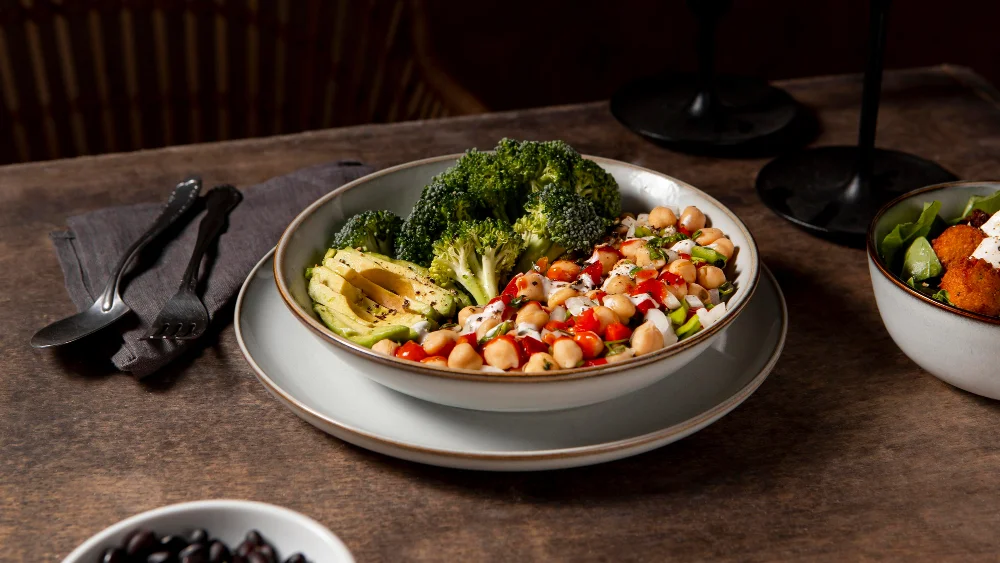
1. Protein first. Pick one palm-sized to hand-sized portion of a protein you actually like. Chicken, fish, eggs, beef qeema, prawns, paneer, channay (chickpeas), or a generous bowl of dahi. Decide this before anything else, because protein is the part most desi plates skimp on.
2. Pile on non-starchy vegetables. Aim for half the plate. Kachumber salad, sautéed palak, bhindi, gobi, capsicum, tinda, karela, cucumber, tomato. These add fibre and volume so the meal feels big without adding many carbs. Fibre also slows digestion, which helps steady your energy.
3. Add one fat. A drizzle of olive oil, a few slices of avocado, a spoon of pesto or tahini, some nuts, or the natural fat already in the meat. Fat carries flavour and slows the meal down further. One source is enough.
4. Keep starch small and optional. This is where you control the carbs. Instead of two or three rotis, have one. Instead of a full plate of rice, have a few spoons, or swap in cauliflower rice. If you trained hard that morning or you are not cutting carbs at all, a bit more starch is fine.
If you want a visual way to get these proportions right, CureOnCall’s food and diabetes plate calculator lets you see how a balanced plate looks for your situation before you cook.
A 30-second mental test
Before you sit down, glance at the plate and ask: Can I clearly see the protein, and do the vegetables take up more space than the starch? If yes, you have built a low-carb, high-protein lunch. If the rice or bread is the biggest thing on the plate, fix that one thing and leave the rest.
Desi low-carb, high-protein lunches that actually work here
Most articles on this topic assume cauliflower rice and grilled salmon are your normal. Here is the same idea using food you already eat in Pakistan.
Chicken karahi, less oil, no naan. Half a plate of karahi chicken, a big kachumber salad, and one roti instead of two or three. The chicken does the heavy lifting on protein; the salad fills you up.
Anda and sabzi bowl. Two or three eggs (boiled or as a quick omelette) with sautéed palak, tomato, and onion, cooked in a little oil. Fast, cheap, and easily 20 grams of protein before you add anything.
Daal with extra protein, rice swapped down. Daal is good but it is not high protein on its own. Add a boiled egg or some shredded chicken, keep the rice to a few spoons, and add salad. Now it is balanced.
Seekh or chapli kabab plate. Two kababs, sliced onion and tomato with lemon, a spoon of raita, and skip the naan. Naturally low carb and high protein.
Dahi and channay chaat, savoury version. A bowl of thick dahi with boiled channay, cucumber, tomato, and chaat masala. Vegetarian, high in protein and fibre, no cooking required.
Machli (fish) with bhindi. Pan-fried or baked fish with a side of bhindi or gobi and salad. Fish adds protein plus omega-3 fats, and there is no starch unless you add it.
Notice the pattern in every example: the protein is the main event, vegetables are generous, and the roti or rice is small or gone. That is the whole skill.
How much protein do you actually need?
The official floor for protein is about 0.8 grams per kilogram of body weight per day, which is the Recommended Dietary Allowance used in most dietary guidelines. That is the amount to prevent deficiency, not the amount that keeps you full or supports muscle.
People aiming for better appetite control, weight management, or muscle maintenance often do better higher than that. Studies on higher-protein eating commonly land in the range of roughly 1.2 to 1.6 grams per kilogram per day, and trials in adults trying to manage weight have found that higher-protein patterns improve fullness and appetite control compared with standard-protein ones (NIH / PubMed study). Spread across three meals, that is where the 25 to 35 grams of protein per lunch comes from.
A rough, practical way to picture 30 grams of protein:
- A palm-sized piece of chicken or fish (around 100 to 120g cooked)
- Three to four eggs
- A large bowl (around 200g) of dahi plus a boiled egg
- A cup of cooked channay plus a little paneer or dahi
Your real number depends on your weight, activity, age, kidney health, and whether you are pregnant or breastfeeding. If you want a target built around your body and your goals rather than a generic figure, that is exactly what an online nutrition consultation with a clinical dietitian is for.
Who this style of lunch helps most
People managing blood sugar. This matters a lot in Pakistan. The International Diabetes Federation reports that Pakistan has the highest age-standardised diabetes prevalence in the world, at around 31.4% of adults in 2024, which is close to one in three. Many cases are still undiagnosed. A lunch built around protein and vegetables, with smaller portions of fast carbs, produces a gentler rise in blood sugar than a rice-and-bread plate. If you have diagnosed diabetes, a structured diabetes diet plan supervised by a clinician is far safer than self-experimenting, especially if you take medication.
Women with PCOS or thyroid issues. Higher-protein, lower-refined-carb eating is a common part of nutrition strategies for insulin-related conditions. If this is you, a plan tailored to your hormones and labs makes more sense than a one-size template. CureOnCall offers focused support for PCOS, thyroid, and hypertension diets.
Anyone recovering from surgery or injury. Protein supports tissue repair, so a protein-forward lunch fits naturally into recovery eating. There is condition-specific guidance for post-surgery recovery nutrition if you are healing right now.
Busy people who crash at 3 PM. If your afternoons disappear into fog and chai, this is often the cheapest fix available. You are not eating less, you are eating in a better order.
Try Also: Food Calorie & Diabetes Plate Calculator for Pakistani and Global Meals
Mistakes that quietly ruin a “high-protein” lunch
Calling daal or rice your protein. Daal has some protein, but a typical serving is not enough to anchor a meal. Treat it as a side and add a real protein source.
Drowning a good plate in sauce and oil. Low carb does not mean unlimited fat. Karahi swimming in oil is still a heavy meal. One source of fat, used with intention, is the rule.
Forgetting the vegetables. A plate of just meat is high protein but not balanced, and it gets boring fast, which is how diets quietly die. The vegetables are what make this sustainable.
Going extreme overnight. Cutting all carbs suddenly often backfires with fatigue, headaches, and cravings, and for some people it is genuinely unsafe (see below). Shrinking the starch and doubling the protein is enough for most people. You do not need zero carbs.
Skipping lunch to “save” calories. This usually leads to overeating at night. A solid lunch protects the rest of your day.
Meal-prep the week in one go
If weekday cooking is the real barrier, batch it on a day off:
- Cook one big protein (a tray of baked chicken, a pot of qeema, or a dozen boiled eggs).
- Wash and chop salad vegetables and store them dry in a box.
- Make one low-carb extra you enjoy, like a bowl of channay or some sautéed sabzi.
- Each day, assemble: protein plus vegetables plus one fat, starch optional.
Most of these keep three to five days in the fridge. Assembly takes two minutes, which is the difference between sticking to this and ordering a paratha roll at 1 PM.
Important: when you should not do this without guidance
This is general nutrition information, not a personal medical plan. A low-carb, high-protein approach is not right for everyone, and a few situations need a clinician’s input first.
- If you have diabetes and take insulin or sulfonylureas: cutting carbs can lower your blood sugar too far. Do not reduce carbs and keep the same medication dose without your doctor’s supervision, because the dose may need adjusting.
- If you have chronic kidney disease: a high-protein intake may not be appropriate for you. Get an individualised protein target from your medical team.
- If you are pregnant or breastfeeding: do not restrict carbohydrates without professional guidance, as your needs are higher.
- If you have a history of disordered eating: focus on adding protein and vegetables rather than on cutting and restricting, and consider speaking with a professional for support. Food should not become a source of anxiety.
- Children and teenagers have different growth needs and should not follow restrictive adult eating patterns.
When in doubt, talk to a qualified clinician. CureOnCall’s clinical nutrition team builds plans around your medical history and goals rather than handing you a template.
Frequently asked questions
A bowl of thick dahi with boiled channay, cucumber, and tomato, or a tin of tuna over salad with olive oil. Both take a few minutes, need no stove, and easily clear 25 grams of protein.
There is no fixed rule, but many people aim for roughly 15 to 30 grams of carbohydrate at lunch, mostly from vegetables and dairy rather than rice or bread. If you manage diabetes, your carb target should be set with your clinician, not guessed.
Yes. The goal is a smaller portion, not zero. One roti instead of three, or a few spoons of rice instead of a full plate, keeps the meal lower in carbs while still feeling normal.
For people with healthy kidneys, higher protein within sensible ranges is generally considered safe. If you already have kidney disease, protein needs to be individualised by your medical team, so get personal advice first.
The baseline guideline is about 0.8 grams per kilogram of body weight, but many adults aiming for fullness and muscle maintenance eat more, often in the 1.2 to 1.6 grams per kilogram range. Your exact number depends on your body and goals, which a dietitian can calculate for you.
A protein-forward lunch helps with fullness, which can make it easier to eat the right amount without feeling deprived. Weight involves many factors though, and sustainable results usually come from a plan that fits your whole routine, not one meal in isolation.
Build your next lunch around protein, not bread
Pick your protein first, make the vegetables generous, add one fat, and let the roti shrink. Do that for one week and judge it by how your afternoons feel.
If you want this turned into a plan built around your blood sugar, your hormones, or your recovery, book a consultation with CureOnCall and a clinical dietitian will tailor the numbers to you.
This article is for general information and does not replace personalised medical or nutritional advice. Reviewed by CureOnCall’s clinical nutrition team.

DT Nimra Naqvi is an MPhil-qualified clinical nutritionist specialising in therapeutic, condition-specific nutrition care. She designs personalised nutrition plans for metabolic, hormonal, digestive, and recovery-related conditions, grounded in evidence-based practice. Her work focuses on integrating nutrition with medical treatment and rehabilitation to support sustainable health outcomes. DT Nimra Naqvi provides professional online consultations for international clients across the USA, UK, and Europe.