By Dr. Mustajab Haider Bukhari (PT), Founder, Cure on Call. Reviewed by the Cure on Call physiotherapy team.
Quick answer: Kinesiology tape is a low-risk support tool, not a cure. The research is mixed, and the most consistent finding is short-term pain relief while the tape is worn. It works best as an adjunct to assessment and exercise, not on its own. Used sensibly, it can take the edge off pain and give you the confidence to move during rehabilitation, which is where the real recovery happens.
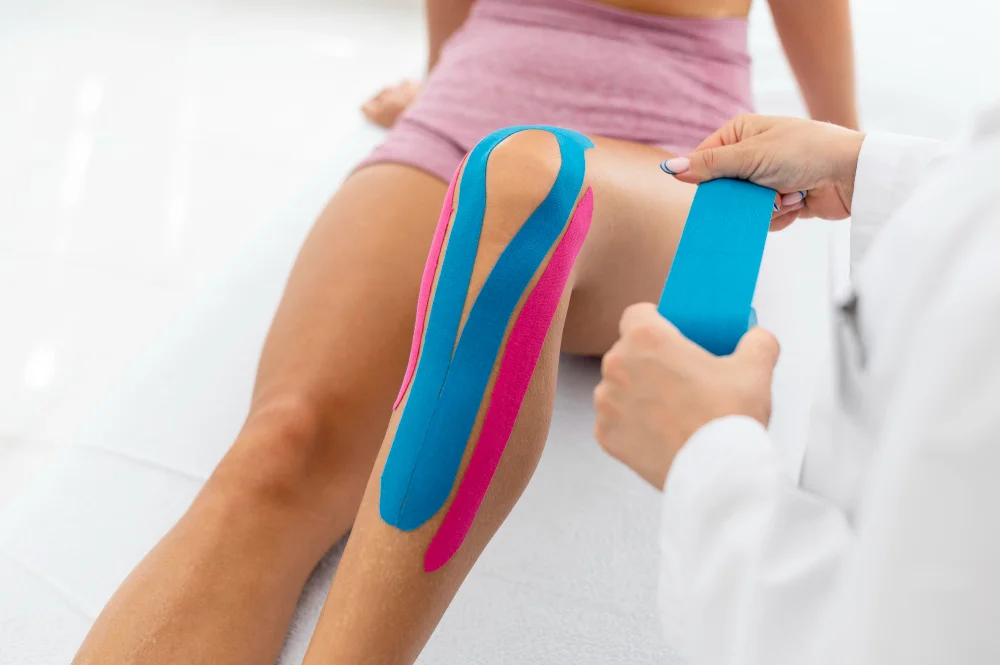
If you have watched athletes or physiotherapy clinics, you have seen the bright strips of tape applied across knees, shoulders and ankles. The honest question most patients have is the right one: does it actually do anything, or is it decoration? This guide gives you the calibrated answer, what the evidence supports, what it does not, who it can help, who should avoid it, and how it is applied for common conditions. It is written from clinical practice, not from marketing.
What kinesiology tape is, and what it is not
Kinesiology tape, also called kinesio tape or elastic therapeutic tape, is a thin, stretchy cotton strip with an acrylic adhesive that is applied directly to the skin. Unlike rigid athletic tape, which is designed to lock a joint down and restrict motion, elastic tape is meant to move with you and allow a near full range of motion.
That difference matters, because a lot of the “taping works” evidence people quote is actually about rigid taping or bracing, which is a different tool with a different job. When this guide talks about evidence, it is specifically about elastic kinesiology tape.
The commonly proposed mechanisms are sensory and supportive rather than structural:
- Proprioceptive feedback. The pull of the tape on the skin gives your nervous system extra input about where the joint is and how it is moving. This is the mechanism with the most support.
- Pain modulation. Sensory input from the skin may compete with pain signals, which can reduce how much pain you feel in the moment.
- Light support and muscle cueing. The tape can give a gentle reminder to a muscle to switch on or relax, without holding the joint in place.
You will also see claims that the tape lifts the skin to drain swelling and boost circulation. These claims are popular but the least supported, so treat them with caution. The most defensible way to think about kinesiology tape is as a sensory aid that changes how an area feels and behaves for a few days, not as something that mechanically fixes the underlying problem.
What the evidence actually shows
This is where most taping pages either oversell or dismiss. Here is the measured version.
Across systematic reviews, the overall evidence for kinesiology taping is inconclusive. A widely cited systematic review of kinesio taping for musculoskeletal injury found insufficient evidence to support its use, while noting a perceived benefit could not be ruled out. A 2024 overview of systematic reviews reached the same conclusion at a higher level, describing the body of reviews as dispersed and inconclusive across regions including the knee, shoulder, elbow and back.
The one finding that holds up reasonably well is short-term pain relief. A systematic review described as “fact or fashion” found moderate evidence that pain drops immediately while the tape is being worn. For plantar fasciitis specifically, a sham-controlled randomized trial found that real tape reduced heel pain more than fake tape in the first few days, with the largest difference around the two-day mark.
So the honest summary is:
- The effect is real but modest, and it is mostly about pain in the short term.
- It is not a structural cure. It does not realign joints or repair tissue.
- A placebo contribution is plausible, but so are genuine sensory mechanisms, and for a cheap, low-risk tool the distinction matters less than whether it helps you move.
- Tape alone, without exercise and assessment, does very little. Every credible review lands on the same point: it is an adjunct.
That last sentence is the whole strategy. Tape buys you a window of less pain. What you do with that window, the exercise and loading that actually rebuild the tissue, is what changes the outcome.
Conditions where kinesiology tape may help
Taping is most reasonable for non-emergency musculoskeletal problems where a short reduction in pain helps you move and exercise:
- Plantar fasciitis and arch or heel pain
- Lateral ankle sprains and a feeling of instability, once the acute phase is settling
- Patellofemoral pain, often called runner’s knee
- Thumb CMC and MCP joint pain, including early arthritis
- Tendinopathies such as tennis elbow and Achilles pain
- Posture-related neck, shoulder and upper back tension
- Mild swelling after injury, as part of a wider plan
It is a reasonable tool to try in these situations. It is not the treatment by itself.
When NOT to use kinesiology tape
Taping is not appropriate, or not the first step, in these situations:
- Open wounds, broken skin, active skin infection or fragile skin
- A known allergy to acrylic adhesives
- An injury that needs proper immobilisation, such as a suspected fracture or dislocation
- Severe, undiagnosed swelling, redness and heat that could signal infection or a blood clot
- Any red flag that needs medical assessment first, including numbness, progressive weakness, an inability to bear weight, or pain that is severe and unrelenting
If you are not sure what you are dealing with, get assessed before you tape. Tape can quietly mask a problem that needs real attention.
If you are in Pakistan then you may also want to know: How Online Physiotherapy Works in Pakistan.
How to apply kinesiology tape properly
Application is a skill, and exact tension is learned hands-on, but the principles are simple and consistent across the body.
- Prepare the skin. Make sure it is clean, dry and free of lotion. Clip rather than shave heavy hair so adhesion is good and removal is comfortable.
- Round the corners of each strip so the edges do not catch and peel.
- Anchor with no stretch. The first and last few centimetres of any application go down with zero tension. Anchors hold the tape on; they are not where the work happens.
- Apply the working strip with light to moderate tension. For most support and cueing applications that means roughly a quarter of the tape’s stretch, not its full stretch. More is not better. Too much tension is the most common cause of skin irritation and blistering.
- Position the joint in the direction that lengthens the target tissue while you lay the tape, then return to neutral.
- Activate the adhesive. Rub along the tape briskly for a few seconds. The acrylic glue bonds with body heat and holds better after one to two hours.
- Wear it three to five days, then give the skin a short break before reapplying. Remove it earlier if you see redness, itching or a rash.
If the area goes numb, tingles or changes colour, the tape is too tight. Take it off and reapply with less tension.
Application techniques for common conditions
The techniques below are practical starting points. For a first application, or for anything involving a hand or knee, it is worth having a physiotherapist show you once, because small differences in position and tension change the result.
Plantar fasciitis and arch support
This is the application with the cleanest evidence. In a sham-controlled trial, real tape reduced heel pain more than fake tape over the first few days, which fits what we see in clinic: it is a useful bridge while you work on the actual drivers.
The goal is to support the arch and offload the plantar fascia. Anchor at the heel with no stretch, then run a strip along the sole from the inner heel toward the ball of the foot with moderate tension so the arch feels gently cupped and lifted. A second strip crossing the first spreads the load. Many people tape before getting out of bed, since the first steps of the morning are the worst.
Tape is the short-term piece. The lasting fix is calf and plantar fascia stretching, gradual loading and sensible footwear. If heel or arch pain has lasted more than a few weeks, an assessment-led physiotherapy plan will move you forward faster than tape alone.
Lateral ankle sprain and instability
Be honest about the evidence here: much of the research showing taping reduces ankle re-injury is about rigid tape and bracing, and the elastic-tape evidence on its own is weaker. What elastic tape can do is add proprioceptive feedback and confidence once the acute swelling has settled, usually after the first day or two.
Anchor above the ankle and on the midfoot with no stretch, then run support strips across the outer ankle with light to moderate tension to back up the lateral ligaments, keeping the foot in a neutral position. The single most important point: tape does not rebuild a stable ankle. Balance and strength work for the peroneal muscles does, and the best results come from combining the two. For a graded sprain-recovery plan, see post-injury and post-surgery physiotherapy.
Patellar tracking and runner’s knee
The evidence for taping patellofemoral pain is mixed, and reviews list the knee among the regions where results are inconclusive. In practice, a strip that nudges the kneecap toward the midline can reduce pain enough to let people squat and climb stairs more comfortably, which makes the strengthening work easier to do.
Tape around the kneecap, not on it. Anchor below the inner knee and draw a strip up and in toward the midline with light tension so the knee feels gently centred, never compressed. Stop if it pinches.
The driver of runner’s knee is usually weakness or control issues at the hip and quadriceps, not the kneecap itself, so taping without strengthening rarely lasts. A targeted knee and hip physiotherapy programme addresses the cause.
Thumb CMC and MCP joint pain
The thumb base joint takes a heavy load every time you grip or pinch, and it is a common site of early arthritis, especially in women over fifty. Evidence here is limited, so frame taping as gentle symptom support rather than treatment.
Use lower tension than you would elsewhere, because an arthritic joint is sensitive and you do not want to compress it. Anchor at the wrist with no stretch, then apply light-tension strips across the joint from the wrist toward the thumb base to give a feeling of support while keeping the thumb free to move. Pair it with thumb and grip strengthening, activity pacing and simple aids such as jar openers. Taping helps you get through the day; it does not slow the arthritis.
What to realistically expect
A fair expectation, drawn from the evidence and from clinic, looks like this:
- In the first few days, if taping is going to help you, you usually notice less pain and a bit more confidence to move while the tape is on.
- Over the first few weeks, the real change comes from the exercise the tape lets you do, not from the tape itself.
- As you get stronger, you need the tape less, moving from daily wear to using it only for harder activities or flare-ups.
If a few days of taping changes nothing, that is useful information too. It usually means the problem needs a different approach, and it is time for a proper assessment rather than more tape.
Get assessed before you rely on tape
Taping is safe to try, but it is not a substitute for knowing what is actually wrong. A physiotherapy assessment establishes the diagnosis, screens for anything that needs a doctor, and builds the exercise plan that taping is meant to support. That is the difference between managing a problem and just quieting it.
Seek medical care first, rather than taping, if you have any of these: a suspected fracture or dislocation, an inability to bear weight or grip, severe swelling that is not improving, numbness or progressive weakness, or signs of infection such as spreading redness, heat and fever.
Frequently asked questions
Both can be true at once. The evidence supports a real but modest effect, mainly short-term pain relief while the tape is on, and a placebo contribution is plausible on top of that. For a cheap, low-risk tool that helps you move, the practical answer is that it can help as part of a plan, and it does very little on its own.
Most applications last three to five days. Remove it sooner if the edges curl, the tape loosens, or your skin becomes red or itchy. Give the skin a short break before reapplying.
Yes, it is water resistant. Pat it dry and smooth the edges afterwards. Long hot showers, chlorine and steam rooms shorten its life.
You can learn to self-apply for straightforward areas like the foot or ankle. For the hand, thumb or knee, or for a first application, having a physiotherapist show you once gets the position and tension right and makes the tape more useful.
Remove it, wash the area gently and let the skin recover for a couple of days. A skin prep layer or a different brand can help. Mild redness that fades quickly after removal is normal; a spreading or itchy rash is not, and means you should stop.
No. Colour is cosmetic, and reputable brands perform similarly. Application technique matters far more than which roll you buy.
In the early phase, keep it on during your exercises for the extra feedback and comfort. Later, many people tape only for harder sessions or higher-risk activity. Never wear it so tight that it restricts circulation.
Where this leaves you
Kinesiology tape earns a place in a recovery plan as a low-cost way to reduce pain and move with more confidence for a few days at a time. It does not replace a diagnosis, and it does not replace the exercise that actually rebuilds tissue. The patients who get the most from it are the ones who use that window of relief to do the rehab work underneath.
If pain in your foot, ankle, knee, back or shoulder keeps interrupting your day, the fastest next step is an assessment that tells you what is really going on and gives you a plan built around it. You can book an online physiotherapy consultation with the Cure on Call team across Pakistan, or explore our physiotherapy services, with home visits available in Faisalabad.
About the author: Dr. Mustajab Haider Bukhari (PT) is the founder of Cure on Call and a qualified physiotherapist in Faisalabad, Pakistan, working in musculoskeletal rehabilitation, chronic pain and post-injury recovery through in-clinic, home and online care.
This article is educational and does not replace individual medical assessment. For a personal recommendation, speak with a licensed physiotherapist or doctor.
Read Also: How to Do Chest Physiotherapy for Adults
Read Also: How Physiotherapy Helps in Treating Vertigo?

Dr. Mustajab Haider Bukhari (PT) is the Founder and Owner of Cure On Call and a qualified physiotherapist based in Faisalabad, Pakistan. He specialises in musculoskeletal rehabilitation, chronic pain management, and post-injury recovery through evidence-based physiotherapy. Dr. Bukhari has extensive experience providing patient-centred care through in-clinic and home-based physiotherapy services. Under his leadership, Cure On Call integrates physiotherapy with nutrition and remote care to deliver holistic, accessible healthcare solutions.