
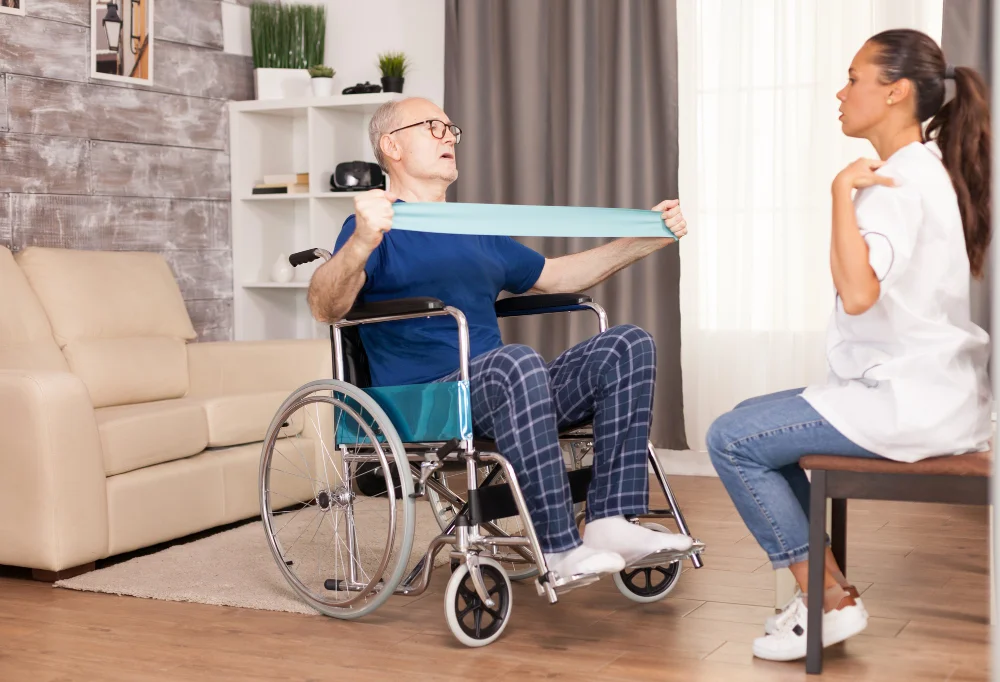
Have you ever watched a loved one struggle to move one side of their body and wondered whether real recovery is actually possible?
I still remember my first clinical exposure to a post‑stroke patient with hemiplegia. He could speak fluently, understood every instruction, yet his right arm lay motionless on the bed, as if it no longer belonged to him. When I asked him what frightened him most, he didn’t say paralysis — he said, “I’m scared I’ll never be useful again.” That moment reshaped my understanding of physiotherapy for hemiplegia. It is not simply about muscle strength or gait re‑education; it is about restoring dignity, autonomy, and participation in life.
This article is written from a clinician‑informed, evidence‑based perspective. It is designed to answer what patients, caregivers, and healthcare professionals genuinely want to know: what physiotherapy treatments for hemiplegia actually work, why they work, and how they should be applied in the real world.
What Is Hemiplegia? (A Clinical, Not Textbook, Explanation)
Hemiplegia refers to paralysis or severe weakness affecting one side of the body, most commonly resulting from stroke, but also from traumatic brain injury, brain tumours, cerebral infections, or congenital neurological conditions. Unlike temporary weakness, hemiplegia disrupts motor control, balance, sensation, posture, and functional independence.
From a physiotherapy standpoint, hemiplegia is not a static condition. It evolves over time, influenced by neural plasticity, early intervention, patient motivation, and the quality of rehabilitation.
Key clinical features physiotherapists address include:
- Abnormal muscle tone (flaccidity or spasticity)
- Loss of selective movement
- Impaired balance and postural control
- Altered gait patterns
- Reduced functional use of the affected arm and leg
Understanding this complexity is essential before discussing treatment.
Why Physiotherapy Is Central to Hemiplegia Recovery
Physiotherapy is not an optional add‑on after neurological injury; it is the primary driver of functional recovery. According to large‑scale rehabilitation studies, patients who receive early, task‑specific physiotherapy show significantly better outcomes in mobility, activities of daily living, and long‑term independence.
A landmark review in The Lancet Neurology highlighted that intensive, repetitive, and goal‑oriented physiotherapy enhances neuroplasticity, enabling the brain to reorganise and compensate for damaged neural pathways.
In practical terms, physiotherapy helps by:
- Re‑educating the brain–muscle connection
- Preventing secondary complications (contractures, pressure sores)
- Promoting safe mobility and independence
- Reducing caregiver burden
Core Physiotherapy Approaches for Hemiplegia (What Clinicians Actually Use)
Rather than relying on a single technique, effective haemiplegia rehabilitation combines multiple evidence‑based approaches tailored to the individual.
Neurodevelopmental Treatment (NDT / Bobath Concept)
The Bobath approach remains widely used in neurological physiotherapy. Its focus is not on isolated muscle strengthening but on normalising movement patterns and improving postural control during functional activities.
In my clinical experience, Bobath principles are particularly valuable in the early stages, when patients present with flaccidity or emerging spasticity. Proper handling, positioning, and facilitation can prevent maladaptive movement patterns from becoming ingrained.
Clinical insight: Patients who are taught correct bed mobility and sitting balance early tend to progress faster to standing and walking.
Task‑Oriented and Functional Training
Modern neurorehabilitation strongly supports task‑specific practice. Instead of abstract exercises, patients repeatedly practise meaningful tasks such as:
- Standing up from a chair
- Reaching for household objects
- Walking on different surfaces
Research published in Stroke confirms that repetitive functional training improves motor outcomes more effectively than non‑functional exercises.
This approach aligns with how the brain learns: by doing, not by isolating muscles.
Gait Training and Balance Rehabilitation
Walking after hemiplegia is rarely symmetrical or energy‑efficient. Physiotherapists address:
- Weight‑bearing asymmetry
- Foot drop and knee instability
- Reduced trunk rotation
Interventions may include overground gait training, treadmill training (with or without body‑weight support), and balance exercises targeting anticipatory and reactive postural control.
A practical observation: Patients often walk better when therapy focuses on trunk control rather than only the affected leg.
Constraint‑Induced Movement Therapy (CIMT)
One of the most evidence‑backed interventions for upper‑limb hemiplegia is CIMT. The unaffected arm is restrained for parts of the day, forcing use of the affected limb.
Multiple randomised controlled trials show that CIMT improves arm function and cortical reorganisation when patients meet selection criteria (some active movement must be present).
Important caveat: CIMT is not suitable for all patients and must be professionally supervised to avoid frustration or injury.
Strength Training: Dispelling an Old Myth
For years, clinicians feared that strengthening exercises would worsen spasticity. Current evidence has decisively disproved this.
Progressive resistance training, when appropriately prescribed, improves strength without increasing spasticity and contributes to better functional outcomes.
The key lies in dosage, alignment, and functional integration.
Managing Spasticity Through Physiotherapy
Spasticity is one of the most challenging aspects of hemiplegia. Physiotherapy does not eliminate spasticity entirely, but it plays a critical role in management.
Effective strategies include:
- Sustained stretching and positioning
- Weight‑bearing through the affected limb
- Rhythmic movement and trunk rotation
- Functional task practice rather than passive stretching alone
When combined with medical management (such as pharmacological interventions), physiotherapy significantly improves comfort and mobility.
Technology‑Assisted Physiotherapy: What’s Worth It?
Rehabilitation technology has advanced rapidly, but not every device adds value.
Evidence‑supported options include:
- Functional electrical stimulation (FES) for foot drop
- Virtual reality‑based balance and upper‑limb training
- Robotics as an adjunct to high‑repetition practice
Technology works best when it enhances intensity and engagement, not when it replaces hands‑on clinical reasoning.
Read Also: Kinesio Taping Guide: Evidence, Applications and Clinical Techniques
Home‑Based Physiotherapy and Caregiver Involvement
Recovery does not occur only in the clinic. Home programmes are essential for maintaining gains.
Effective home programmes focus on:
- Simple, safe functional tasks
- Clear repetition targets
- Caregiver education for handling and positioning
In my experience, patients whose families are actively involved demonstrate better adherence and emotional resilience.
If you are in Faisalabad, Pakistan then Cureoncall provide home based physiotherapy in Faisalabad. Moreover, we can also help you through online physiotherapy consultations with experienced doctors.
How Long Does Recovery Take?
This is one of the most common — and difficult — questions.
Neurological recovery follows no fixed timeline, but research consistently shows:
- The greatest improvements occur within the first six months
- Meaningful gains can continue for years with appropriate training
The deciding factor is not time alone, but continued, purposeful practice.
Actionable Takeaways for Patients and Families
If you or a loved one is living with hemiplegia right now, focus on what you can control:
- Start physiotherapy as early as medically safe
- Prioritise functional, task‑based exercises
- Practise little and often rather than sporadically
- Engage the affected side in daily activities
- Ask therapists why an exercise is prescribed
Small, consistent efforts compound over time.
Frequently Asked Questions
Can physiotherapy cure hemiplegia?
Physiotherapy does not “cure” hemiplegia, but it significantly improves movement, independence, and quality of life through neuroplastic adaptation.
How often should physiotherapy be done for hemiplegia?
Most evidence supports frequent, repetitive practice — ideally, daily activity with structured sessions several times per week.
Is walking recovery possible after hemiplegia?
Yes. Many patients regain functional walking, particularly with early and targeted gait training.
Does age affect recovery?
Age influences recovery speed, but motivation, intensity of therapy, and overall health are equally important.
Final Thoughts: Recovery Is a Process, Not a Promise
Physiotherapy treatment for hemiplegia is not about miracle cures or instant transformations. It is about a consistent, evidence‑based effort guided by skilled clinicians and supported by informed families.
I have seen patients take their first independent steps months after being told not to expect much. Progress may be slow, uneven, and frustrating — but it is real.
If you are navigating hemiplegia, I encourage you to share your experiences or questions below. What has helped you most so far? Let’s learn from each other.
Need Physiotherapy for Hemiplegia? Contact Us Now!
Read Also: How Physiotherapy Helps in Treating Vertigo?

Dr. Mustajab Haider Bukhari (PT) is the Founder and Owner of Cure On Call and a qualified physiotherapist based in Faisalabad, Pakistan. He specialises in musculoskeletal rehabilitation, chronic pain management, and post-injury recovery through evidence-based physiotherapy. Dr. Bukhari has extensive experience providing patient-centred care through in-clinic and home-based physiotherapy services. Under his leadership, Cure On Call integrates physiotherapy with nutrition and remote care to deliver holistic, accessible healthcare solutions.